



Chris Wigley lives in Barbados and looks for cool indie games. As far as job descriptions go, it’s hard to beat.
He fell into the role almost by accident. Previously, he was a commercial pilot for the Caribbean-based Leeward Islands Air Transport Services – but then the airline crashed into administration during the COVID pandemic. However, Wigley had spent the previous few years working on a website that curated interesting indie games, and soon after he was laid off, he was approached by Rufus Kubica, external development director at Warsaw-based 11-Bit Studios.
“They didn’t have a scout, and he had found my blog,” recalls Wigley. “So he was like, would you like to work for us and find games for 11-Bit?”
11-Bit Studios is well known for developing games like This War of Mine, Frostpunk, and The Alters. But it also maintains a publishing arm, which has released titles like Moonlighter, Children of Morta, The Invincible, Indika, and the just-launched Death Howl from developer The Outer Zone.
The company’s rate of releases is not high – it has published just a dozen games since 2014. But that’s part of the strategy, says Kubica. “The fact that we have a pretty small output is tied to the fact that we are very, very engaged in each project,” he says. “We want to have one, maybe two releases each year, but with a very strong focus.”
But why get into publishing at all? “To be frank, the simple reason is just to have more releases,” says Kubica, who notes that there could be years between internally developed 11-Bit titles. “But we also saw an opportunity to expand the idea of meaningful entertainment – so heavier, more thought-provoking games.”
“We want our publishing to echo what our internal titles do,” adds Wigley – although he adds that the criteria can be quite broad.
The company doesn’t target any specific genres, although there are a few areas it shies away from, like VR-only titles. “The market for that is very small,” says Wigley, “and you have to make one of the best games in the genre in order for it to reach the heights that you aspire to.” Platformers are typically off-limits too. “If you make a great platformer and it takes off, it can do amazingly well, but there’s so many of them that it’s extremely difficult to stand out.”
Other no-go areas include sports titles, hyper-casual games, purely narrative-driven titles and purely puzzle games. Mobile games are also off 11-Bit’s shopping list – which is perhaps surprising considering that many of the studio’s own titles have come to mobile in the past. Wigley offers a qualifier: “We’ve published games on mobile, but not mobile games, which I think is an important distinction.” A reminder, perhaps, that mobile game development is a very different beast.

“We are looking for things that are slightly different, maybe leaner in production, and things that maybe we wouldn’t experiment on internally,” says Kubica. “All the games that we have published so far are things that we wouldn’t have done internally, but no one is surprised that they are part of 11-Bit.”
Wigley offers Indika as an example, which was the first game he scouted. “The game is extremely scary from a market standpoint. It’s very, very weird. It’s talking about a subject that can offend a lot of people in terms of [religion]. There are a ton of red flags [indicating] this might not sell well, and we have no idea what the reaction to it will be, so we probably wouldn’t have developed it ourselves. But someone else was brave enough, and we were like, ‘This is awesome’.”
Like many publishers in today’s risk-averse environment, 11-Bit typically requires a vertical slice demo before signing a new title; the days of paper pitches are now long gone. That said, Wigley emphasises that 11-Bit often gets involved in projects early on. “We’re not a publisher that likes to just jump on late, six months before a release. We generally like to be involved at an early stage, because one of our strong suits is our creative feedback.”

Of course, like any publisher, 11-Bit doesn’t always get it right. Kubica says they have a “special file” listing a few games that they evaluated but turned down – and that went on to become big hits. “One of the titles there is Cult of the Lamb, for example, a game that’s rightfully a huge success. When it first reached us, though, we were focusing on projects that felt more meaningful and less ‘happy-gore-y’. Plus, we had already signed Moonlighter 2 at the time, which also had that management plus dungeon dual structure.
“Would I love to have Cult of the Lamb in our portfolio now? Quite possibly! But I’m genuinely glad it found its home with Devolver – they’re possibly the best fit for that kind of game, and I love seeing indie projects like that truly thrive.”
Lessons learned
In terms of its publishing output, 11-Bit Studios had two of its biggest hits early on, with Moonlighter in 2018 and Children of Morta in 2019. The titles published since haven’t hit those sales heights – although as Kubica notes, the market has changed significantly. “We didn’t have 3,000 games on Steam Next Fest back in the day.”
Still, he says the studio is “very happy” with The Invincible and Indika. “They are not viral successes, not like Minecraft levels of success, but they went really well.” By contrast, he says the company was “underwhelmed” with the results for The Thaumaturge, a 2024 isometric RPG from Polish developer Fool’s Theory, which was 11-Bit’s biggest publishing project in terms of development budget. But he adds that the game still landed well with the community – and following the success of Clair Obscur: Expedition 33, more people are discovering it in their search for other turn-based, European RPGs.

Back in the early days, after 11-Bit published games like Beat Cop and Tower 57, they found developers were only sending them similar-looking titles. “We were trapped by pixel art games,” recalls Kubica. “It was very tough for us to leave that niche.” But 11-Bit gradually, deliberately moved into publishing games with a “very strong meaningful aspect and relatively high production values” – although Kubica thinks that they might have shifted too far in that direction. “We lost parts of what made our previous titles successful, and this is the intuitiveness, the lightness of the games.”
Now, in what he calls 11-Bit’s third phase of publishing, the company is looking for “smaller titles that are more agile, cheaper in production as well, but definitely mechanics driven. The core USP of each game has to be mechanical, and the thematic layer has to be on top of that.”
Wigley adds that it’s been a learning curve. “We figured that meaningful, thought-provoking element would be enough to drive sales, like it did in the past for things like What Remains of Edith Finch and Firewatch. And it’s still possible with things like Mouthwashing, but it’s a case where you have to make a game that is almost hitting every note perfectly. If not, it kind of falls by the wayside if it’s missing the mechanical element. So now we’re shifting back to a phase where the mechanics are at the forefront.”

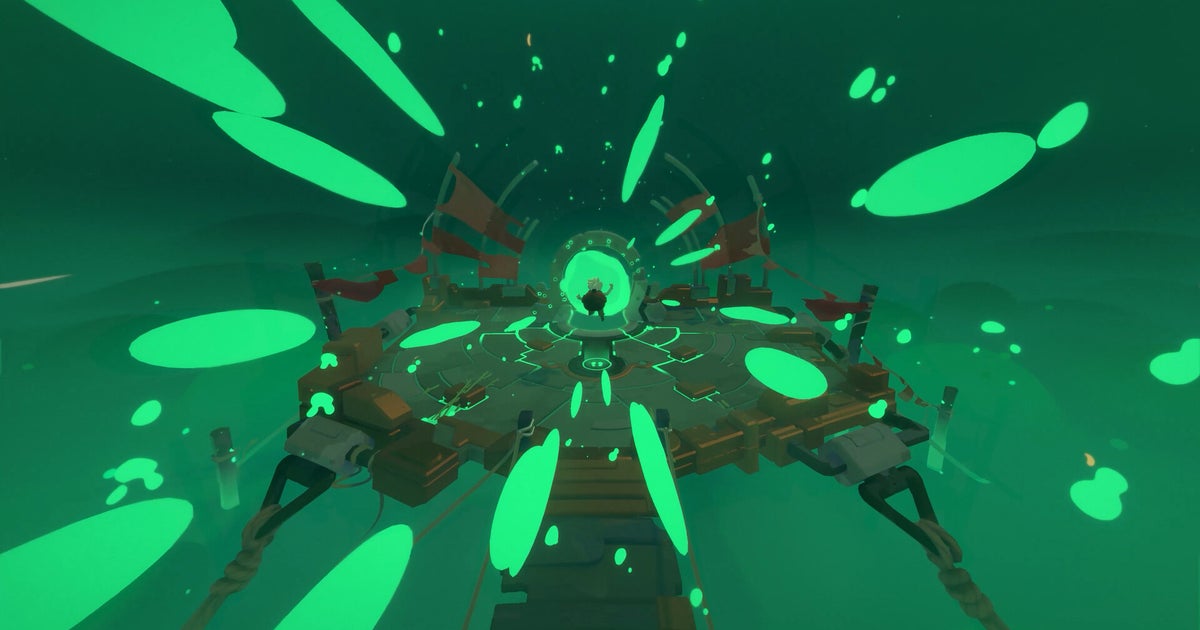
Death Howl is the first fruit of this third phase: a soulslike deck builder, unashamedly mechanics-focused, but that nevertheless retains that looked-for thought-provoking element in the form of a hunter on a quest to bring back her son from the dead. Wigley says that it was a rare gem to come through 11-Bit’s public submission process. Typically, the quality of publicly submitted games is “not good,” he notes. “But this was one of the best we received.”
Although he admits the mix of cards and grid-based combat isn’t unique, he liked the way the game’s freedom of movement added a layer of strategic thinking: the player can move anywhere, although movement drains mana. That, combined with the art style and atmosphere, meant seeing the game was “almost love at first sight.”
11-Bit’s pivot towards smaller, cheaper-to-make games comes at a time when funding for mid-range titles is drying up – ironically, perhaps, at a time when AA games like Expedition 33 are emerging as a force to be reckoned with.
Wigley says that it’s “definitely trickier” in the mid-range space, “because you have to invest quite a bit, and it’s also not backed up by AAA marketing, so you can’t force something through in the AA space with your marketing stick.” But he predicts that we’ll see the quality bar will rise in AA, “because the studios and projects that survive to get published will be the very upper echelon in terms of quality.”.
Sustainability
Even though 11-Bit is now focusing on smaller titles, Kubica says there aren’t plans to drastically increase the number of titles the company publishes per year. Part of the reason for that is that the studio wants to keep a “passion-driven curated approach,” lavishing care on each title.
But even with a limited number of releases, publishing still makes up a “substantial chunk” of 11-Bit’s bottom line, says Wigley, who adds that it helps to keep 11-Bit sustainable between the infrequent releases of its own internally developed titles, making the “down years much, much softer and easier to manage.”

He notes that more and more developers are turning to publishing for similar reasons. “It is definitely a way if you have the capital from one of your internal projects,” he says, although he adds it’s not exactly easy. “You can’t just turn into a publisher overnight. And there’s a lot of overhead and a lot of stress.”
Most importantly, publishing requires building a good reputation. Kubica says that the quality of games 11-Bit receives has substantially increased over the years as a result of its well-reviewed output. “It’s all about building on that foundation.”
Then again, with the ease of self-publishing on Steam and the availability of funding through a variety of non-traditional platforms, there’s an argument to be made these days that developers might not need publishers at all. Wigley says it depends on what the developer’s needs are.

“I think there are studios that should be self-published, or self-published with some services hired, maybe a marketing firm or someone to help with a Steam page. But then there are others that I think benefit a ton from having a publisher like us alongside them, because we are bringing a lot of things that are difficult to find on your own.
“One of those, I think, is that a lot of developers find that when you’re making something, you get so hyperfocused, you can’t see how it appears from the outside. And external feedback, not just from the public, but from people who understand games, understand how to market them, understand what makes games tick, I think is extremely helpful. And that’s probably our biggest strong suit.” Another benefit is visibility: Kubica points out that 11-Bit Studios has nearly 1 million followers on Steam.
In short, 11-Bit isn’t worried about not being able to sign games. Rather, the worry – shared with countless others across the industry – is that there’s too many of them. “That, to me, is the bigger issue,” says Wigley. “Because getting a game to stand out now is hard. In five years from now, I don’t know where things will end up.”
