
The affordability crisis has the industry caught in a pincer grip. With hardware priced too high to allow for healthy audience growth, even as software is often priced too low for many games to make a profit, we face the grim prospect that – for the time being at least – gaming overall is simultaneously too expensive for many consumers to tolerate, and also so cheap that much of the industry is perched on an economic knife-edge.
While there’s a fair bit of doom and gloom to that assessment, it’s worth noting that crises also create opportunities for companies that are smart and agile enough to take advantage. An affordability crisis is no different – it opens up avenues to market for companies and creators who are able to think differently about the audience and the products they might respond to.
It’s hard not to think about how mainstream consoles are priced (let alone the soaring costs of PC builds) when you consider the fascinating data point Circana’s Mat Piscatella posted on Bluesky a few days ago: that in the closing weeks of November, the PlayStation 5 was pushed into third place in US unit sales, trailing not only the Switch 2 but also the Nex Playground.
The what?
… was the bewildered response from many gamers, and even quite a few people in the industry. I won’t claim to have been much ahead of the curve here, having only heard about the Nex Playground a few months ago thanks to having friends with young kids in the US who asked me about it. They’d heard about it from other parents at their kids’ school – suggesting that the console enjoys enormous success in word-of-mouth marketing.
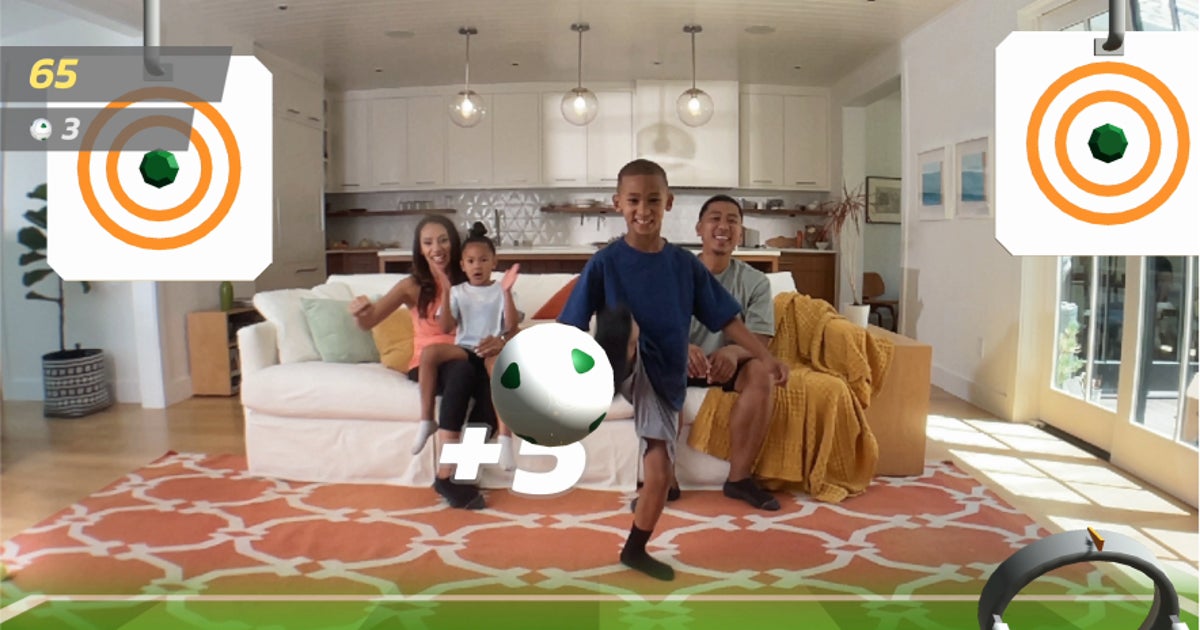
The Nex Playground is, in essence, the heir to the ideas behind Microsoft’s Kinect, or to dig deeper into industry history, Sony’s EyeToy. It’s a cute little cube with a camera on the front whose software is all gesture-controlled – there’s no controller.
It ships with five built-in games, and offers a much larger selection, including some major licensed kids’ properties like Bluey and Sesame Street, on a monthly subscription plan that costs less than ten dollars. The console itself has an SRP of around $250 but is regularly available for under $200.
This is a device laser-focused on families with small kids, and extremely well-designed for that market. The inexpensive hardware is essentially an Android system (comparisons abound to the ill-fated Ouya), but it runs a curated set of proprietary games – no risk of kids downloading games with expensive IAP transactions here. The whole thing is marketed and understood as a fun, safe, and inexpensive gaming device for kids and their families.
The key thing to note here is that Nex Playground’s success – while it’s probably not making platform holder execs lose any sleep just yet – comes from targeting a market that the major platform holders have effectively abandoned. It’s not for nothing that I described the device as inheriting from EyeToy and Kinect; it’s not just inheriting their technological concepts, it’s also inheriting their audience.
When console platform holders pushed the emergency stop button on the escalator that used to bring console prices steadily downwards over their lifespan, they essentially gave up on this kind of market and its related software categories. Few families are willing to consider a $500 console with $70 games and complex, expensive controllers for their pre-teen kids; certainly not enough of them to make it worthwhile for studios to focus on the kinds of games that actually thrived once consoles hit those mass-market price points.

Dancing games, singing games, mini-game collections, quiz games; there are some vestigial remnants of these genres on the Switch, but even Nintendo’s pricing isn’t well-tuned to this market, and arguably hasn’t been since the heyday of the Wii. Like Sony, it has also released a significantly discounted Switch 2 as a Japan-only model, which I maintain is a canary in the coalmine for affordability more broadly. Some games in those categories have managed to make the switch to mobile, but by and large, these once-thriving genres have dwindled.
The economics of the industry pricing hardware out of consumers’ hands – and certainly out of kids’ hands – doesn’t actually remove the interest or demand for that kind of entertainment experience, though. Nex Playground’s stroke of genius really lies in taking one of Nintendo’s foundational ideas – building cheap, accessible, robust devices using dated hardware and a philosophy that’s more toy-maker than tech giant – and using it to wedge itself into a market segment that other platform holders have either abandoned or simply forgotten about.
The flipside of the affordability crisis, at least in terms of hardware, is that there’s a wealth of low-end hardware on the market that’s very cheap and perfectly capable. If you can step away from ever having to worry about what its framerate will be in Cyberpunk 2077, there are any number of low-end chipsets that can easily maintain a smooth framerate in a good quality kids’ game, or casual game of any kind. The challenge, of course, lies in building good-quality software that can take advantage of that lower-end hardware, but that’s nothing that proper investment in good development teams can’t fix.

Nex Playground has done very nicely for itself from the kids’ market, and while it may not knock PlayStation off its second-place perch all that often, the positive reception it gets from families and strong word-of-mouth among parents suggest that it’s still got plenty of runway ahead of it.
This is far from being the only mass-market audience that platform holders have tacitly abandoned with their pricing strategies in recent generations, though. While reaching those other blind spots will require far more creativity than just copy-pasting Nex Playground’s strategy, opportunities abound for smart companies to pick up the slack in audience segments that the industry has given up on. At risk of sounding like a LinkedIn post from the worst person you’ve ever met: a crisis truly can be an opportunity if you’re able to look at it with the right eyes.