


Surviving for 25 years as an independent game developer is no mean feat. In the UK, only a handful of studios have lasted for longer without being bought out or shut down. But paradoxically, success was one of the hardest things for Introversion Software to deal with.
The studio was established in 2001 by Chris Delay, Mark Morris, and Thomas Arundel, and their first game, Uplink, became a critical darling. Likewise for the follow-up releases Darwinia and DEFCON. But although these titles sold reasonably well, Introversion still skirted financial ruin for much of its early existence.
That all changed with the release of Prison Architect in 2015. The game became a runaway success, selling 2 million copies by July 2016, and generating $25 million. A few years later, Introversion would sell the IP and publishing rights to Paradox Interactive for an undisclosed sum.
But following on from Prison Architect’s massive success has been difficult. “For the first time in our history, we didn’t have to get a game out in the next 12 months or we weren’t eating,” recalls Morris. “That is a luxurious position to be in, and I’m absolutely not complaining, but it’s not necessarily brilliant for creativity because you don’t have any constraints boxing you in.”
The studio’s initial follow-up to Prison Architect was Scanner Sombre in 2017 – which “bombed in a big way” according to creative director Chris Delay, selling just 6,000 copies on Steam in two months. After that, cushioned by the financial windfall from Prison Architect, the studio spent years wandering back and forth, trying to come up with a new direction.
“The way we make games, we don’t start with a complete design for a game and then fill in the blanks,” explains Morris, who acts as the bridge between Delay’s creative vision and Arundel’s sales-focused role. “We take a step forward, try something, see if it’s working, take another step forward, see if that’s working. And whilst that is a great way to innovate, because you don’t quite know where you’re going to end up, also you can end up in some dark, closed-off alleyways.”
This approach worked in the early days of Introversion, but not once they began to scale up. “That was one of the difficulties,” says Morris, “because we had a relatively large team off the back of Prison Architect. Trying to give them direction when we didn’t really know what direction we were going in was really a quite difficult thing to do.”

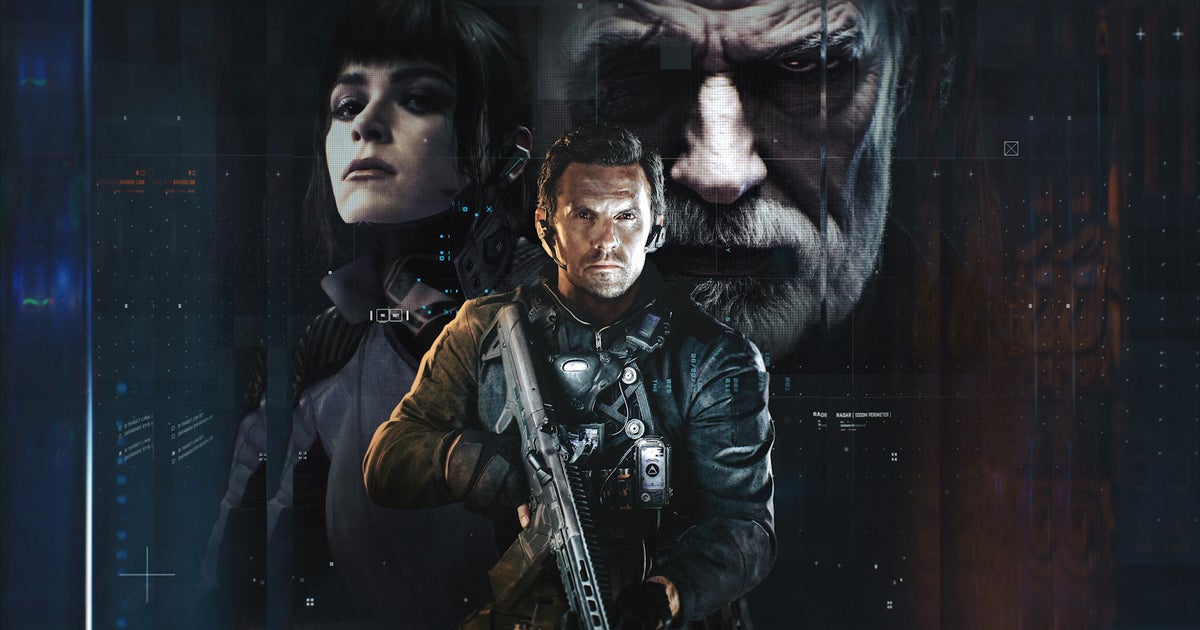
With Prison Architect, he says, the overall vision was there from the start. But with The Last Starship, which was released in Early Access in 2023 and will finally have its 1.0 launch on February 3 this year, the development process was “much more meandering.”
One of the biggest issues was that the team was adamant that they shouldn’t repeat what they’d done before. “We’d made Prison Architect and had spent a long time on it, and really didn’t want to make another colony sim.” says Morris. “We really wanted to try and push into a different direction.”
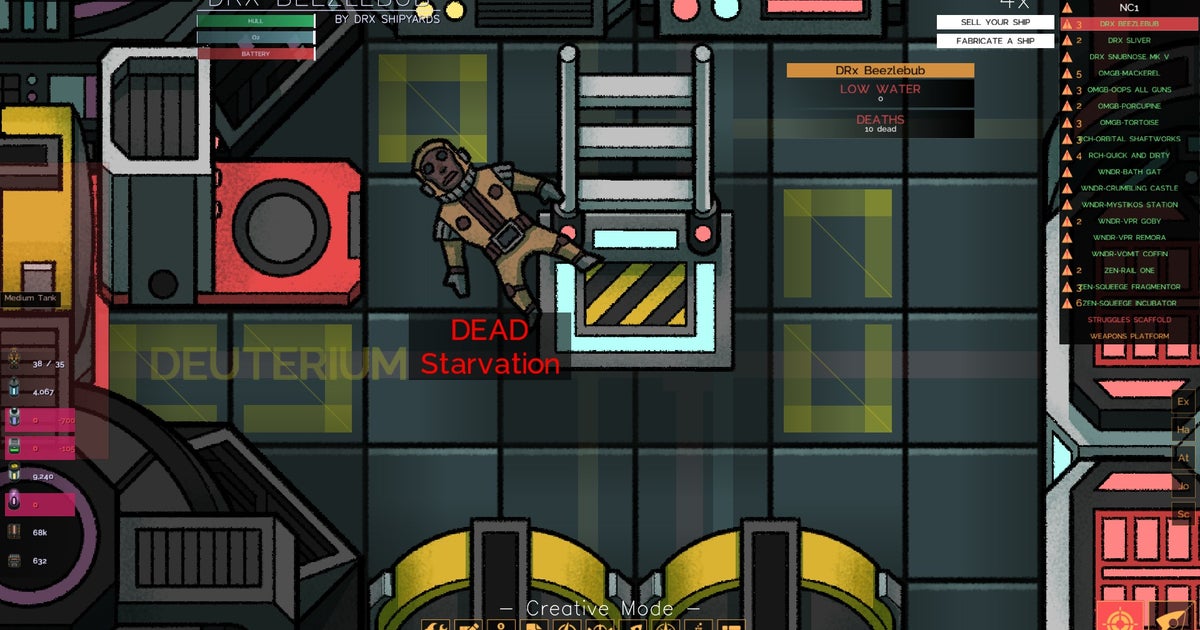
Delay in particular strongly resisted any elements that harked back to Prison Architect. But as the blueprint for The Last Starship gradually took shape – in which the player designs and upgrades a starship, then uses it to explore star systems – it became clear that it would be impossible not to feature at least some colony sim elements. “You need to have some people in there,” explains Morris. “There needs to be some heart. You want to have these moments where you’re fighting to keep the oxygen on, and it doesn’t make any sense if you don’t have people in there to experience that particular consequence of what’s happening.”
It became a case of navigating “two extremes,” he says: the “desire to be other than Prison Architect at all costs”, but also the realisation that for the game to work, it needed people, and those people needed managing.
Goodbye Prison Architect
Introversion made a decisive break with Prison Architect in 2019, selling it lock, stock, and barrel to Paradox. The publisher has greenlit a sequel, but as of August 2024, Prison Architect 2 has been delayed indefinitely.
Looking back, does Introversion regret selling the franchise? “It was the right decision at the time,” says Morris, diplomatically. “I don’t want to open that can of worms.”
From a business standpoint, we suggest it might have made sense to stick with Prison Architect, gradually adding more updates and churning out sequels. Morris disagrees. “What Chris would say to you, if he heard you say that, he’d say, ‘If Mark had had his way, we would’ve made Uplink 2, which might’ve sold a little bit more than Uplink. We would’ve made Uplink 3, which would’ve sold less. Then we would’ve made Uplink 4, which would’ve sold less, and then the business would’ve folded.’ And he’s bang on right about that.
“If your business is about being creative and doing new things, then you have to do creative and new things. You cannot stick with what worked previously and just iterate on that, because then you become FIFA, right? There’s only a few games that are big enough to be able to put out another update, another graphics pass, and keep their audience. And ultimately, somebody will come along and sweep away everything from you.”
He acknowledges, however, that there could have been a middle way, where Introversion continued to update Prison Architect while working on something new. “Introversion nowadays could do that,” he says. “Chris has got the mindset to be able to work on two different projects at once. But in that era, he simply did not.”

Historically, Delay has always focused 100% on the “idea that’s currently exciting him,” says Morris, with little interest in working on anything else. “Whereas now he’s a little bit older, a little bit more reflective, got some kids, can’t put in the 24-hour coding sessions anymore, he’s able to switch between projects a little bit more.”
Looking back now, was it simply a case that Introversion was bored with Prison Architect? “Yeah, to be frank, that was it. Chris wanted to move on to something new,” says Morris. “I could have kept going. I think that there were still a lot of good things that could have been done with that game. And in the future, if we had another hit at that scale, I think Chris would be more amenable to doing that, to looking at how he might be able to support it.”
More generally, Introversion has started paying greater attention to its older titles. When the studio started in the 2000s, it was normal for games to flare up and quickly fade away – but now games can carry on generating at least some digital sales income forever, and investors are recognising the importance of having a healthy back catalogue.
“We’d let the Steam pages rot, we’d let the code rot”
“Part of the reason that we’re successful is because we’ve got this back catalogue of really strong games, unique in their own right, that don’t really age,” says Morris. “And we’d let them rot, really. We’d let the Steam pages rot, we’d let the code rot. And we realized that now we need to go back round, we need to give it all a refresh, we need to keep it all current, because we’re not just the current game that we’re working on, we’re also everything that we’ve done previously.”
Hello Last Starship
Seven years on from the sale of Prison Architect, Introversion is now a much leaner operation, stripped down to the four directors (the three founders plus John Knottenbelt, who joined in 2006), along with one full-time member of staff and some freelancers.
“Even with those numbers, the monthly bill is high,” says Morris, who is acutely aware of the pressing need to keep the company’s finances under control. “Your team size has to be very lean. You have to be very focused on that. It’s easy to become a little bit complacent, a little bit lazy, perhaps, and you just can’t afford to do it, not with the number of Steam games that are coming out. You can’t really control how many units you’re going to sell, but you can control how long it takes you to get there and how much that costs.”

Introversion nowadays is a far cry from the company that was flush with Prison Architect cash a decade ago. Times are certainly tougher – but Morris says that the financial pressure actually benefits the team. “I think it focuses the mind, and I think it forces us to work a lot harder, certainly around the way in which developers are interacting with the audience.”
In the past, he says, Introversion has been hands-off when it comes to community engagement. “But now, I don’t think you can really get away with that. I think your Discord game, your Reddit game, your community management, the assets that you’re putting out… There needs to be a lot more interaction coming out from the studio in order to get any attention at all.”
Launching on Steam without any kind of audience following beforehand will result in your being punished by the algorithm, he says. “And then it’s quite difficult, I think, to change that trajectory. If you look at the successful games coming through Next Fest, they tend to have quite a large community that’s already been built around them. So when they press the button, that community jumps forward. And you can’t buy anyone to do that for you. That can only come from within the business.”
Introversion doesn’t employ a community manager, since Morris says they would only have to keep asking Delay what things they should talk about on social channels. “Whereas if Chris is just doing [community engagement] as part of his day-to-day, and if I’m doing it as part of my day-to-day, then you’re naturally putting that material out there, it’s naturally part of your workflow.” He says that YouTube Shorts has been particularly effective at increasing view counts, with Morris trimming 15-30 second segments out of Introversion’s bigger YouTube videos.
The Last Starship itself has now found its own groove, resolutely different from what Introversion has done before, but by necessity still harking back to the colony sim nature of Prison Architect. Morris gives the example of toilets. “So in Prison Architect, they all escape through the toilets, right? And Chris is like, ‘I really don’t want to model toilets. It’s boring’.” Yet the idea of a spaceship without any kind of toilet facilities is unconscionable.
The compromise is that there’s a habitation deck that the player can’t see inside or modify. “Because we’re not interested in where you put your sofas, right?” But naturally this deck has WCs, which in turn produce waste. “And depending on how many people are in the habitation deck, that’s how much shit is coming out per cycle, which you then have to recycle.” This gets used to grow plants, and the water from it is extracted, tying into the game’s focus on providing an engineering challenge. “But what we don’t want you doing is plumbing in toilets and looking at all of them going and sitting down with a morning copy of Space News, because that’s too much like Prison Architect.”
“We’ve got another roll of the dice, that’s what I would say”
Given how long The Last Starship has taken to make, with plenty of meandering and reversing out of dead ends along the way, there’s understandably a lot riding on it. Is its release make or break time for Introversion? “We’ve got another roll of the dice, that’s what I would say,” replies Morris. “We’ve got another idea that we’re working on.” If sales of The Last Starship turn out level with Introversion’s most pessimistic predictions, this fallback title could be ready for Q2 next year.
In the end, this mode of operation – dancing along a financial cliff edge, focused on the need to get a new game out to keep the company going – is actually where Introversion excels. “I think that’s probably where the business operates at its peak,” says Morris.
“Because we are aware that we are on one last roll, that has prompted all of these discussions about, ‘Right, we know what we’re doing with Last Starship, it’s got its audience, it’s got its market, it’s out there, we’re going to continue to develop it, but for the next game, building our audience around that, we need to up our game, we need to step it up to the next level.’ And I don’t think we would have had those conversations – well, we didn’t have those conversations – when we were post-Prison Architect in that kind of bubble thinking, ‘This is all very nice’.”
