



Given the broad economic situation and the specific headwinds the games industry currently faces, we’re all probably primed to expect the worst from financial results season. Microsoft’s Xbox numbers made for a pretty sombre opening act, but the key question remained; are the tribulations of the Xbox division entirely down to its own strategic issues, or reflective of broader challenges for the whole industry?
With financials for the holiday quarter for both Sony and Nintendo now released, the answer is not entirely clear cut – but a reasonable interpretation is that the console market is actually holding up admirably both in terms of hardware and software sales. There are weak points that need to be watched carefully, but overall the numbers should come as a relief regarding the fortunes of the industry overall.
Sony’s figures, despite showing a year-on-year decline in the third quarter and the year to date, are arguably the biggest relief. PS5 sales are slowing, with the December quarter showing 8 million units sold compared with 9.5 million a year previously, but overall they remain strong. The console is up to 92.2 million shipped units and is basically matching the PS4’s trajectory to within a few percentage points – which is impressive, given that the console is notably more expensive at this point in its lifecycle than its predecessor was.
The performance of software and services is even more solid; Sony’s console is seeing more software sales and more service revenue, with PlayStation Network also still growing its user numbers reasonably well (although the company didn’t offer any insight into what tiers of PS Plus those users may be subscribing to, if any). Slowing hardware sales is to be expected for a console in its sixth year on the market; every other metric Sony reported painted a picture of a business in healthy shape.
This doesn’t mean we can stop talking about cost and barriers to entry. The elephant in the room regarding the console business remains the fact that the best-performing consoles sell somewhere in the 100 to 120 million unit range, just as they have for the past couple of decades; genuine headline market growth remains elusive. Within that market, however, PS5 is performing about as well as any console ever could, and rising software and services revenue mean it’s on track to be Sony’s most commercially successful console yet.
Even so, having consoles that get price-hikes and become more expensive over their lifecycle is a hell of an experiment to run in real-time. Sony’s gamble hasn’t hurt sales too much as yet, at least, and they’ll comfortably have a 100m+ installed base by the end of this year.
I don’t necessarily think GTA6 provides a gigantic sales bump to hardware; anticipation for its launch is basically baked into the installed base
That’s a particularly notable point in time, of course, because it’s when we’re now expecting GTA6 to arrive. It’s hard to discuss Sony’s console in 2026 without thinking about the impact of what’s arguably the most eagerly awaited media launch in history. That being said, I don’t necessarily think GTA6 provides a gigantic sales bump to hardware; Sony will be very happy to be solidly established as the industry leader and the default platform for the game, but I’d argue that anticipation for its launch is basically baked into the installed base at this point. Nonetheless, GTA6 will provide the platform for PS5 to see out its lifecycle in good form, likely helping to keep sales consistent through 2027 and get PS5 up to the 125m+ line that Sony will be targeting in that timeframe.
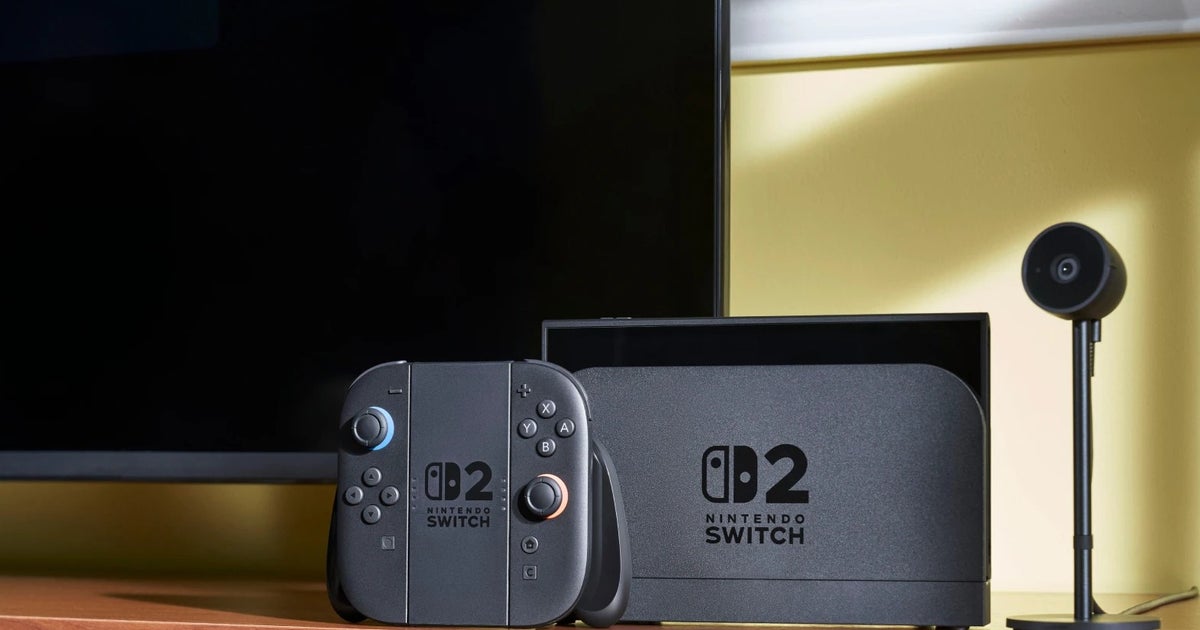
Just like Sony, Nintendo had some mixed news to report in its financials, but overall reaction to its numbers appears to have been a bit jittery. Sales of Switch 2 have been weaker outside Japan than the company expected, though this seems to have been compensated for by stronger sales in their home market, so their overall targets aren’t being revised.
This is an interesting vindication of Nintendo’s decision to provide a price-cut in Japan by effectively region-locking the version of the Switch 2 sold at retail in that market. It will be interesting to see if there’s a similar long-term bump for PS5, which followed suit a few months ago with a cheaper Japan-only digital model. It also arguably raises the prospect of further experimentation with region-locking to control costs in price-sensitive markets outside Japan, although Japan is at least somewhat unique in this regard given the size of its market and the massive devaluation of its currency in recent years.
Like Sony, the wobbles Nintendo has reported here come in a broader context that’s overall very positive – Switch 2 has sold tremendously well despite arguably facing a fairly tough set of headwinds in the market. Nintendo’s situation is undoubtedly more vulnerable to the macro economy – it leans heavily on on a very price-sensitive segment of their market (largely parents buying devices for kids / family use) whereas PlayStation’s core consumers are more devoted enthusiasts who are vocally unhappy with high prices but will still generally pay them (up to a point, at least).
Having said that, the high price of the Switch 2 is only one part of the equation here. Nintendo also clearly had some wobbles in the holiday quarter due to an uncharacteristically weak software lineup. Switch 2 still lacks a big Mario or Zelda title, and while a Mario Kart title is always a big deal, Mario Kart World faces a bit of a first-world problem in the form of Mario Kart 8 still being one of the best-selling video games in many markets.
Despite concerns over consumer sentiment and general economic well-being, both Sony and Nintendo enter 2026 with very healthy looking markets for their platforms
The good thing from Nintendo’s point of view is that there’s no company in the world better positioned to fix this kind of software line-up weakness. Switch 2 had a solid start and now has lots of headroom for improved sales when those major titles come online. A wobble in overseas markets at the end of last year is worth noting, of course, but I don’t think major concerns over the console’s trajectory are justified just yet.
Despite concerns over consumer sentiment and general economic well-being, both Sony and Nintendo enter 2026 with very healthy looking markets for their platforms. The upcoming year will bring its own challenges – those economic headwinds aren’t going to blow themselves out any time soon, unfortunately. On a more positive note there’s the possibility of Sony feeling the first hints of competition in the living room from a new rival for the first time in many years, with Valve’s Steam Machine reportedly still on track to launch in the first half of this year (though the company is muttering darkly about launch timelines and pricing targets at the moment).
That these platforms – and Steam – provide a solid, commercially stable base for the industry is very important in such uncertain times. Even Microsoft will be relieved to see its rivals on firm ground; its best hope to turn the Xbox business back onto a successful trajectory rests on being able to execute superbly as a third-party publisher on platforms like PS5 while it completes a strategic overhaul of its own platform. For everyone else, it’ll just be a nice relief to see some headline figures that tell a largely positive story.
