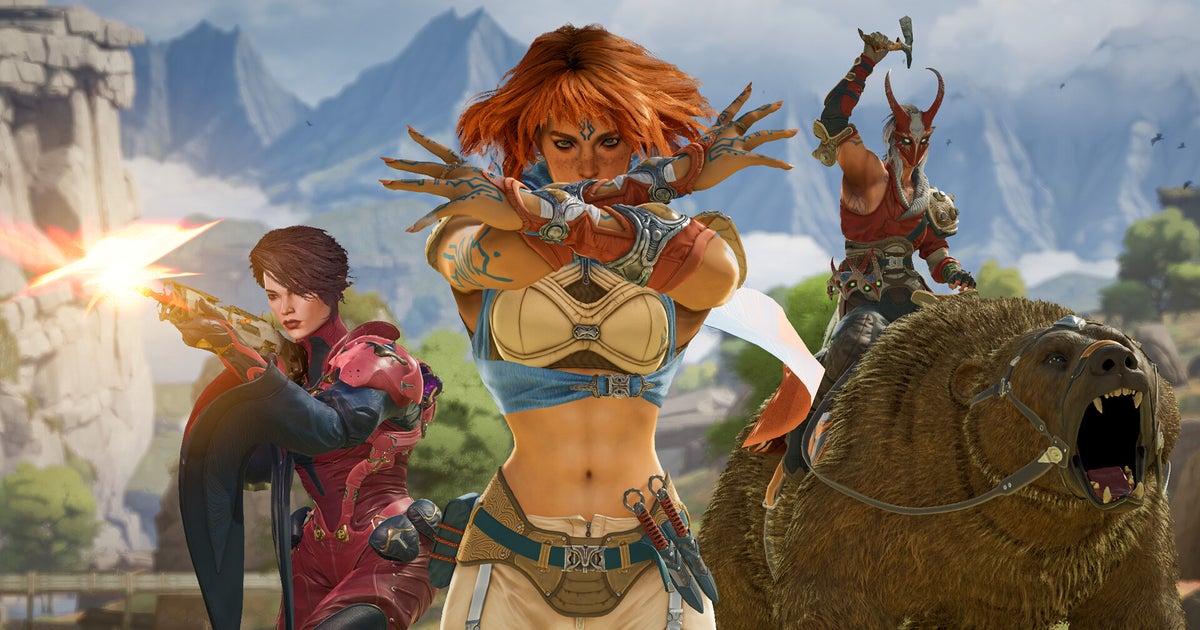
When Wildlight Entertainment scored the closing spot at the Game Awards a couple of months ago for their previously unannounced hero shooter Highguard, it must have felt like an immense coup for the game. Taking one of the most high profile promotional spots the industry can offer was, on paper, a way to rise above the crowded market and cut through the Gordian knot of discoverability.
Instead, the team has spent much of the past couple of months feeling like a punching bag, having gone from almost complete anonymity to being subjected to mountains of scorn, much of it undeserved. The final blow, knocking the wind entirely from their chests, has been a disappointing launch performance followed almost instantly by layoffs at the studio.
Wildlight made significant mistakes with Highguard. The game is a genuinely interesting mix of elements, but its actual pitch to players was muddled and unclear. On top of that, the shadow-drop strategy – with the game launching just weeks after its reveal – was risky and questionable, and the state of the game at launch, wherein six players rattle around on very large maps, suggests significant technical problems that remain to be ironed out.
Perhaps most fatally, the near-immediate round of layoffs post launch suggests the studio didn’t really have the financial backing required to properly put up a fight in this space. This is a crowded and hyper-competitive corner of the industry where success requires being able to outperform and outmanoeuvre the likes of Activision Blizzard and EA. That doesn’t have to mean outspending them, but a lack of financial headroom definitely makes everything dramatically harder.
“If every uninspired trailer received this kind of furious response, the industry would be a smoking wasteland”
If we’re going to acknowledge Wildlight’s missteps, or even try to learn from them, we must also acknowledge that none of those errors explains the vitriol and dismissiveness with which Highguard was met after its announcement. It’s an ugly reality that sometimes the internet just chooses a person or product that’s going to be the designated punching bag for a while, and most explanations of that mob frenzy are little more than post-hoc justifications.
Highguard, unfairly, became a whipping boy for people peeved at the naked, shameless commercialism of the Game Awards, and a scapegoat for those annoyed at the endless flood of live service games. A few minutes of video footage led to a backlash quite out of proportion with any actual issues with what had been shown. The trailer did a poor job of explaining the game’s strengths or ideas, certainly, but if every uninspired trailer received this kind of furious response, the industry would be a smoking wasteland.
Wildlight, for its part, didn’t seem to have any strategy to counter the negativity of this response. Many of the team’s core members had previously worked on Apex Legends, which was famously a shadow-drop title that appeared to almost instant acclaim, and they had perhaps naively assumed that they could pull off the same stunt again. Instead, after the negative response to the trailer, we got two months of radio silence followed by a not-quite-shadow drop.
.jpg?width=2048&height=2048&fit=bounds&quality=85&format=jpg&auto=webp)
I’m sure there will be months, if not years, of what-ifs for those involved in the project. What if they had pulled off a genuine shadow drop, with the Game Awards trailer fading to a screen saying, “Available Today”? The game’s flaws might well have received a kinder landing from a public that didn’t have weeks to marinate in negativity about it, giving the team more breathing room to fix them. What if they’d filled that two-month gap with more videos and other content, giving players a clearer idea of what to expect from the game and its heroes? What if they’d fixed flaws like the 3v3 limit of the game before launch?
Though we can’t know from the outside looking in, some of those things might never have been plausible. Perhaps the unfinished state of the game precluded a shadow drop in December. Perhaps the money simply ran out by February, and the game had to be launched in whatever state they could manage.
Other things, though, must have been possible. The communication around the game’s ideas and innovations could have been much clearer, the company’s response to the poor reaction to its initial trailer more decisive.
Most of all – although I’m certainly not the first to say this – perhaps the whole notion of a shadow-drop-style launch could have been binned in favour of something more like a closed beta and/or Early Access launch, which has proven to be a far more beneficial model for smaller or less-established teams trying to make headway in these kinds of genres. Building a relationship with your initial audience, showing them your willingness to improve and polish a rapidly iterated game, turns them into ambassadors and hype generators, as well as giving you incredibly valuable feedback about what relatively large numbers of real players actually do once they’re playing. Moreover, you get a second bite at the publicity cherry when you leave Early Access and finally get a “proper” launch.
This kind of model is tricky commercially, of course – it essentially demands that you’re running a scaled down version of your entire game service for months before you start to generate proper revenue from the public launch. Again, this is a phenomenally hard sector to compete in without really significant financial headroom. Underlying every other assessment of what went wrong with Highguard lies the cold reality that the studio seems to have significantly underestimated the resources required to launch a competitor in this field.
“This is a phenomenally hard sector to compete in without really significant financial headroom”
Yet it’s also true that resources alone don’t guarantee anything. Concord was backed by Sony (albeit that the backing felt very limp in its closing stages) and still shut down within days – notably also following an extended period as an internet punching bag following a poorly received trailer that did a similarly bad job of actually explaining what the game was supposed to be like. All the weight of a major publisher and their hefty wallet can’t rescue a live service game that just doesn’t find its audience and hasn’t even got a secure enough footing to pivot to a new direction.
Highguard hasn’t gone the way of Concord, and we can hope that Wildlight might still snatch victory from the jaws of defeat. For now, though, it stands as another tough lesson for the many, many companies that have set their sights on this kind of live service space – both independent studios and giant publishers alike. It’s unlikely to be the last poorly received launch for such a game in 2026. The competitive landscape here is tougher than ever, and brutally unforgiving to missteps.