



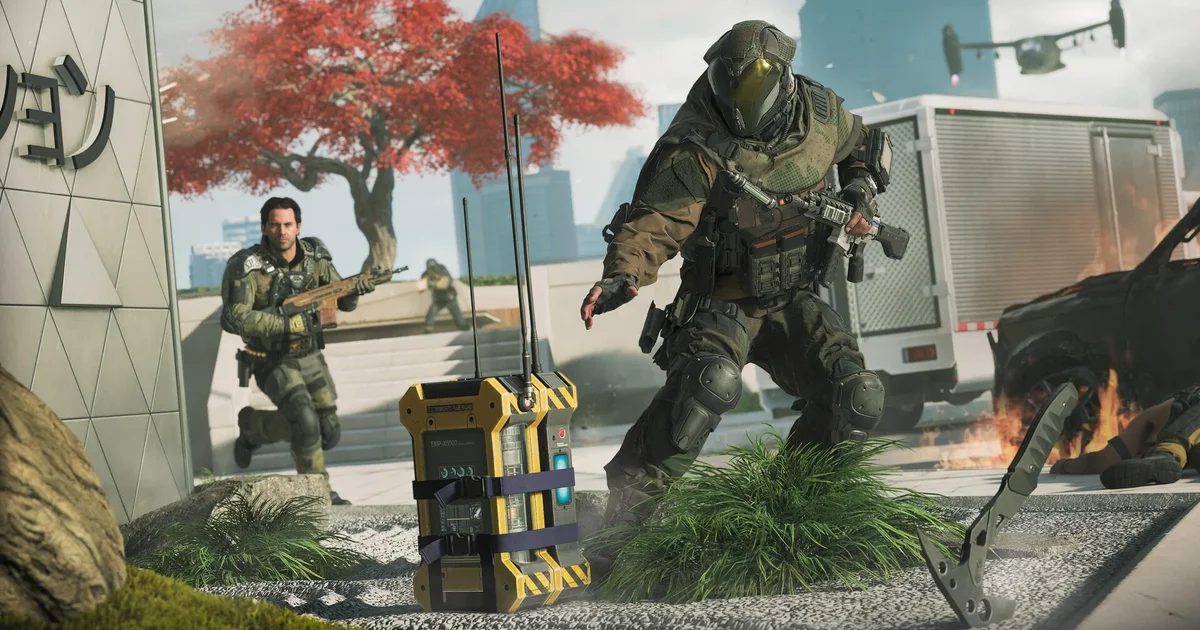
Call it a strategic retreat. A couple of years after the gung-ho announcement that Call of Duty would be avaliable to Game Pass subscribers on launch day, Microsoft has climbed down from that commitment.
It is also reversing most, though not all, of last October’s steep subscription price hikes, which were partly justified by the presence of annual CoD blockbusters on the service.
In some ways, this is an embarrassing reversal for Microsoft – not least since the received wisdom in some quarters was that the unique ability to put CoD games on Game Pass was really the crown jewel the company was reaching for in its $75 billion acquisition of Activision Blizzard.
That overstates things somewhat – for a start, there’s a tendency to overlook how important the oft-forgotten “K” of “ABK”, mobile gaming giant King, was to that transaction – but the scale of the mass-market reach that CoD promised was certainly a key factor as well.
What’s more embarrassing than reversing a strategic misstep is sticking to it longer than necessary. The recent leadership change at Xbox is a perfect opportunity to fix such errors under the guise of new owners doing some spring cleaning.
Putting CoD on Game Pass at launch has been hard to deny as an error for some time. Analysts called the policy reversal predictable. The underperformance of last year’s Black Ops 7 can’t be laid at the feet of the Game Pass strategy, but beneath that headline was a troubling failure to attract new consumers to Game Pass and Xbox ecosystems.
There is an equation at work here, and there are some solutions for that equation – some combinations of variables plugged into its workings – in which Call of Duty being available on Game Pass would supercharge subscription growth and strengthen Xbox’s position against PlayStation and Steam. There was almost certainly a very smart-looking business intelligence dashboard rolled out at internal Microsoft presentations, which showed that version of the equation, where the lines converged in a favourable place, and CoD’s presence on Game Pass created immense value.
That was not the reality. The uplift in recurring Game Pass subscriptions and new customers joining the Xbox ecosystem from putting CoD on the service at launch did not meet expectations.
Figures supplied by Newzoo suggest that CoD’s appearance on Game Pass did drive some business to the subscription service in its first year, albeit at the cost of sales revenue; by the second year, the uplift was gone, an effect exacerbated by the overall weak response to Black Ops 7.
It’s worth stepping back to clearly explain why Microsoft wants people to buy recurring Game Pass subscriptions instead of buying Call of Duty games up front.
The point of moving consumers to a recurring subscription model is to create extra revenue; customers pay more in the long term. The subscription libraries look impressive, with pages of games you can play for “free,” but the numbers are clear. The average software attach rate for a console is known, and adding monthly subscription fees over a console’s lifespan far exceeds the average consumer’s spend on games during that time.
This relies on people staying subscribed – either because they find real value, play an online game they don’t want to lose access to, or forget to unsubscribe. If people subscribe for a month to play many games and then don’t renew, the model fails. But most don’t do that, so it ends up more lucrative long term than selling games up front.
In a successful version of this experiment, CoD would have effectively accelerated the transition to that more lucrative model. Perhaps it would have even peeled off some consumers from Sony’s ecosystem in the bargain.
Instead, it appears that the additional revenue CoD brought to Game Pass was not enough to justify lost revenue from up-front sales. Worse, the Game Pass price hikes meant to balance the books provoked a major backlash, prompting existing subscribers to reconsider the service’s value. There’s nothing worse in subscription services than making consumers think about how much they pay.
“The revenue CoD brought to Game Pass was not enough to justify lost revenue from up-front sales”
So that’s the reason why Microsoft’s reverse ferret on the policy was so predictable – but why did this happen? Why didn’t one of the most commercially successful and important franchises in the history of the gaming medium deliver the impact Microsoft hoped for on Game Pass?
We can note a few ancillary reasons. Xbox’s position against PlayStation was probably too weak this generation to win over players with CoD on Game Pass. The strategy might have worked better years ago, before the platform gap widened. Additionally, the Game Pass price hikes caused a backlash that likely surprised Microsoft. Price hikes always cause upset, but it’s hard to predict the breaking point, and the company seemed caught off guard by the intensity.
The core issue is that CoD was the wrong game for this. The strategy was arguably doomed from the start because Microsoft misunderstood the different audience segments. It tried to lure CoD fans to a subscription service offering little of interest, then passed the price hikes to a Game Pass audience that cares far less about CoD than Microsoft admits.
Consider what Game Pass actually offers as a value proposition to its existing customers. It’s all about variety; its value is unlocked only if you’re the kind of consumer who enjoys trying lots of different games, delving into the nostalgic corners of the retro catalogue, or giving celebrated indie titles a spin after hearing them recommended. That’s an audience that may well enjoy dipping into each annual CoD release (or other giant mass-market titles like EA’s Madden and FC sports titles), but it’s not the be-all and end-all for them. Many of them would probably think of those big mass market games as a guilty pleasure, if anything.
On the other hand, there’s a gigantic market of people for whom the annual releases of titles like CoD, Madden, and FC simply are gaming – at least until Grand Theft Auto 6 appears. The scale of the market for those games, though it ebbs and flows from year to year, dwarfs almost every other kind of release; it’s only rivalled by a handful of gigantic titles that extend their reach across smart devices as well as PC and console, and the very pinnacle of Nintendo’s franchises. It’s not that the enormous audiences for those games don’t ever engage with other games (though some genuinely don’t), but CoD and/or the major sports titles are the central pillars of their gaming engagement, and they engage with a very small number of games each year outside of those pillars.
Putting CoD on Game Pass crossed the wires of those audiences. The latter group is almost impossible to sell on Game Pass; they can calculate that within months they’ll pay more to keep playing CoD than buying the game outright, while Game Pass’s value means little to them. The existing audience will revolt at their subscription cost rising just to include one game many don’t care about.
“Existing Game Pass audiences will revolt at subscription costs rising just to include one game many don’t care about”
Well, okay, maybe two games they didn’t care about. Microsoft added Fortnite Crew to Game Pass when it hiked prices, which felt like another brutal misreading of divergent audiences. Including that third-party offering may explain why Game Pass pricing couldn’t return to its original level in this recent reversion, since it presumably has a contractual agreement with Epic Games.
Unfortunately, this isn’t uncommon. I don’t doubt that there were some teams within Microsoft who had an incredibly clear understanding of the differences between those markets and the flaws in any strategy that conflated them, but the headline idea – “let’s put one of the world’s biggest games on Game Pass and make Game Pass irresistible” – is such a straightforward elevator pitch that it steamrollered those concerns. For all the money and effort that goes into market research across the industry, there’s still a tendency for high-level decision-making to think in terms of a coherent but vaguely defined group of “gamers” rather than recognising the complex differences among diverse consumer groups.
In this context, last week’s changes are not a strategic retreat. Rather, Microsoft is belatedly uncrossing those wires. The actual Game Pass audience will appreciate the subscription price cut while keeping access to the library they value. The idea that CoD’s mass-market audience was a good target for Game Pass was a pipe dream; they will keep buying the game each year as before.
Even without the shot in the arm that CoD would have provided in the fantasy version of this outcome, Game Pass can continue to grow. The value it offers is very appealing to the right consumer group. In the long term, the service can probably be managed better now that it’s been freed of the delusion that there are millions of gamers who buy only one or two games each year and would jump at the chance to pay $29.99 each month instead.
