



Earlier this year, Saber Interactive made its proprietary Hydra technology available to all developers.
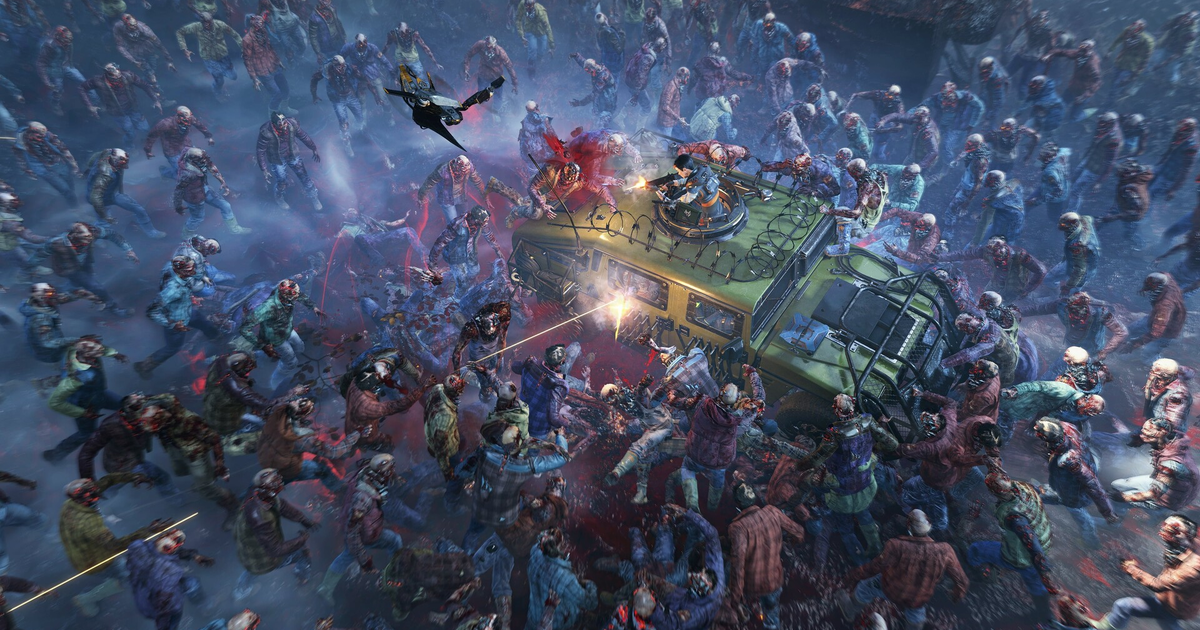
Hydra is an online platform that supports Saber’s titles, such as Warhammer 40,000: Space Marine 2, World War Z, and John Carpenter’s Toxic Commando.
Hydra supports live ops functions, including cross-platform play, matchmaking, and dedicated service management. Developers can integrate the Hydra SDK into their projects, with versions available for Unreal Engine 5, Unity, and Saber’s Swarm engine. These modular services can be tailored to any project.
GamesIndustry.biz spoke with Dmitri Brevdo, Saber’s head of game services, about Hydra’s benefits for developers and how its tools can be integrated into games.
How was Hydra developed initially?
For many years, we have been developing backend services for our games. We initially built a custom backend with matchmaking and microtransaction services for Quake Champions in 2018. We then adapted it for 2019’s World War Z, adding additional services and enabling cross-platform support.
This was the true test for us, as World War Z was a hit at launch, and we quickly learned we needed a foundation for long-tail success. Only a year later, SnowRunner was released, also supported by a different, customised version of Hydra.
A few months after SnowRunner’s launch, its sustained success made it clear that Saber needed a unified, multi-tenant online platform with a single interface. The platform also had to scale across our entire portfolio.
This shift allowed our team to focus on improving the platform’s service quality, automated deployment, and operational infrastructure, rather than rebuilding solutions for each title. The successful 2024 launch of Space Marine 2, which supported hundreds of thousands of concurrent users without major issues, validated this approach.
The platform handled that massive surge while simultaneously supporting our legacy titles like WWZ, a game with over 30 million registered players, without a dip in performance. SnowRunner is now in Season 17 of content with over 20 million registered players. We have successfully onboarded six other games, and the count is rising.
How does Hydra support a game during its lifecycle?
Hydra provides a suite of meta-gaming and live ops services. A key feature is the Configuration Service, which enables developers to update game settings in real time without requiring a patch.
To support player retention, Hydra offers services for leaderboards, challenges, and community events. For marketing, the Anners Service can display tips, promote new DLCs, or highlight player communities.
Our analytics and telemetry tools enable developers to monitor technical metrics, such as FPS, crash rates, and ping, as well as game-specific business metrics.

Why are you making it available to other developers now, and what will it cost?
The platform is now polished and battle-tested, so we are ready to offer it to other studios. We provide hundreds of modular services, including matchmaking, dedicated server hosting, integrated voice chat, live ops microservices, and a PlayStation- and Xbox-certified mod system. This toolkit is built by developers with direct industry experience.
Our pricing is usage-based, ensuring that costs scale directly with each game’s needs. Since Hydra has a modular structure, developers can keep integrations highly cost-effective by only paying for the components they use.
For example, dedicated server hosting is often the largest backend expense. With Hydra, the resulting monthly cost is based on the average CPU, memory, and traffic consumption of the game server. This model ensures developers never pay for unnecessary overhead, while simultaneously incentivising game-server optimisations that further limit resource consumption.
What measures have been put in place to make the technology cost-effective?
The most resource-intensive part of the platform is dedicated server hosting, so we have iterated on this extensively to ensure cost efficiency. We employ a hybrid hosting approach, using long-term-leased bare-metal servers to handle baseline traffic and to handle daily peaks or unexpected surges during releases and marketing events.
We also utilise multiple vendors for both game services and hosting. This multi-provider strategy provides better regional coverage and enables us to maintain multiple fleets in popular areas, enhancing reliability. Most importantly, it gives us the leverage to secure server capacity at highly competitive prices.
What are the advantages over other live ops solutions?
One of Hydra’s key advantages is that it consolidates hundreds of diverse microservices into a single, optimised SDK. With the Hydra SDK, developers gain a ‘battle-tested’ toolkit for PC and all major platforms. Hydra’s track record of successful first-party certifications ensures that its implementation is already fully aligned with the rigorous technical standards of PlayStation, Xbox, Nintendo Switch, and Amazon Luna.
With minimal initial integration, developers gain immediate access to a comprehensive ecosystem of services. This removes the need for individual feature integrations, covering core features such as banners, game configuration, microtransactions, and cross-platform matchmaking, as well as advanced features like dedicated server hosting, crash dump collection, voice chat, and mods.

What are the future plans for the technology?
Each new integration allows us to view our services from a fresh perspective and identify high-value functionality that can benefit the wider ecosystem. Leveraging this experience, we have already deployed the fifth generation of the platform, featuring a unified API that meets the core requirements of most Saber titles.
Moving forward, our goal is to balance standardisation with flexibility. We will continue to tailor services for every project we support, whether that involves extending existing APIs or developing entirely new microservices to meet unique game demands and developer needs.
Are there any major updates in the works? How will it support future games in development?
We are currently focused on refining existing functionality and improving management and analytics of core features, rather than making major architectural changes. This year’s roadmap includes significant infrastructure upgrades to increase hosting flexibility and enhance cost-effectiveness.
To support upcoming titles, we are developing several high-impact features. These include streamlined beta playtest support for large-scale testing, advanced player statistics for deeper insights into player behavior and game health, and developer portal sandboxes for safe testing and iteration of backend configurations.
These updates are intended to ensure Hydra remains a scalable and efficient foundation for games at any stage of their lifecycle.
