
.jpg?width=1200&height=630&fit=crop&enable=upscale&auto=webp "“We’re going to see more hit games coming from publishers you’ve never heard of” – Pocketpair and the indie publishing revolution")


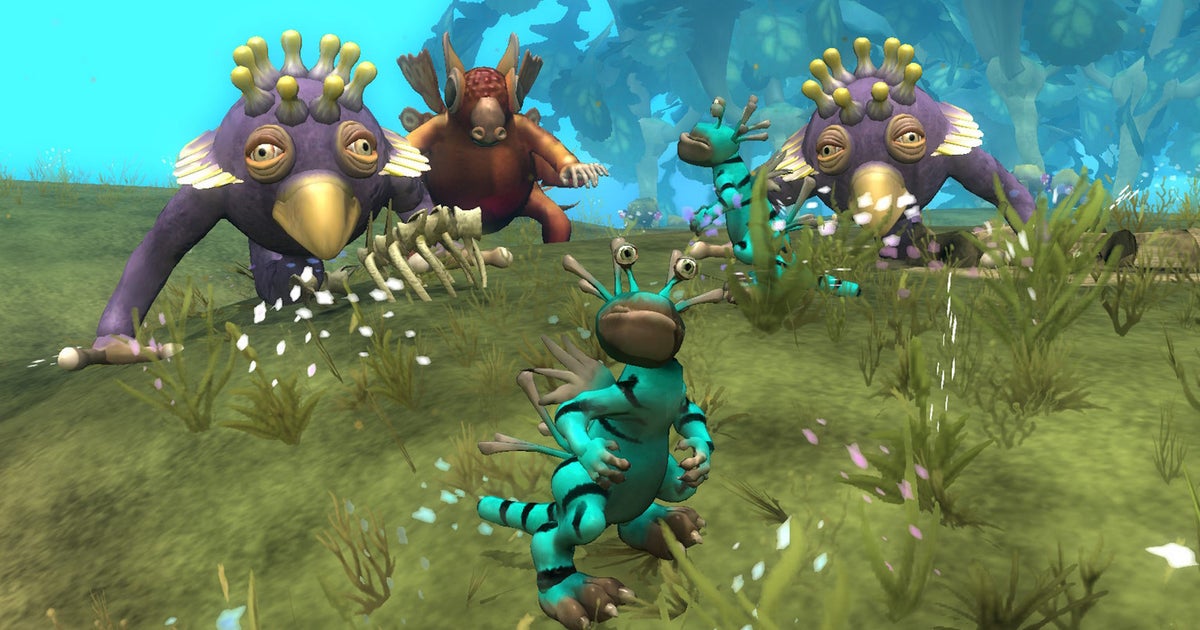
A new retrospective on Maxis’ creature simulation game Spore outlines the operational challenges that shaped its nine-year development cycle.
Speaking to The Design Room, key team members, including chief designer and Maxis founder Will Wright, explained that rapid team growth and limited publisher oversight made it difficult to unify the game.
“Probably the biggest criticism of Spore, which I totally accept, is that it felt like five separate games that were kind of stuck together,” said Wright. “Which it pretty much was.”
“I think the game was nowhere near as good as it could have been [because] we never figured out what the […] core repeating mechanic that built over the course of the game was,” added art director Ocean Quigley.
“We wound up with these disconnected bits and pieces. And for that, I kind of have to blame Will. That was Will’s job.”
The retrospective noted that Wright’s reputation after The Sims gave the team significant creative freedom, but his “luminary” management style resulted in less structured decision-making.
“There wasn’t any structured design process,” said lead gameplay designer Alex Hutchinson. “You had Will as this luminary who was there part-time, making it very difficult to make decisions.”
As the team expanded to over 100 people across two buildings, communication became more challenging, which impacted the game’s development.
Gameplay designer Chris Trottier observed that after Electronic Arts acquired Maxis in 1997, the studio was “flooded” with “brilliant people from the gaming industry,” leading to challenges with self-worth among team members.
“[Eventually we had] a team of 100 people, where everyone has always been the smartest person in any room they’ve ever been in,” Trottier recalled. “And so, [the issue of] ‘How can I be brilliant in parallel with 100 other brilliant people and have it somehow cohere?’ became the operational problem with Spore.”
“There wasn’t any sense of crisis. And sometimes a sense of crisis can be useful for driving decisions and getting to clarity”
Art director Ocean Quigley
The retrospective also described the relationship between EA and Maxis as relatively hands-off, due to the financial success Wright brought to EA with The Sims franchise.
“I blew a lot of money making Spore, and I really appreciate the opportunity to do that,” said Wright. “People at EA, and all the people I worked with – that I was given that opportunity to go crazy and do something kind of insane, it’s an honour.”
Chris Hecker, design and lead engineer of procedural generation, added: “They gave us a ton of leash. We never felt pressure. EA’s got lots of problems, but this was not one of them.”
“Will had made EA a bajillion dollars with The Sims, so he had more credibility than anybody,” said Quigley.
“That gave him license to explore half-baked ideas and see if there was anything there, but it also gave him license to be self-indulgent. There wasn’t any sense of crisis. And sometimes a sense of crisis can be useful for driving decisions and getting to clarity.”
Overall, the team acknowledged Spore’s complicated legacy, but emphasized that its procedural technology was a significant achievement, despite its imperfections.
“I think Spore was overall a failed game design, but it had more magic in it than most games did,” said Hecker.
“Even though the game didn’t cohere as a whole, most games, even games that are really good, often don’t have these moments in them that are just incredibly magical.”
