



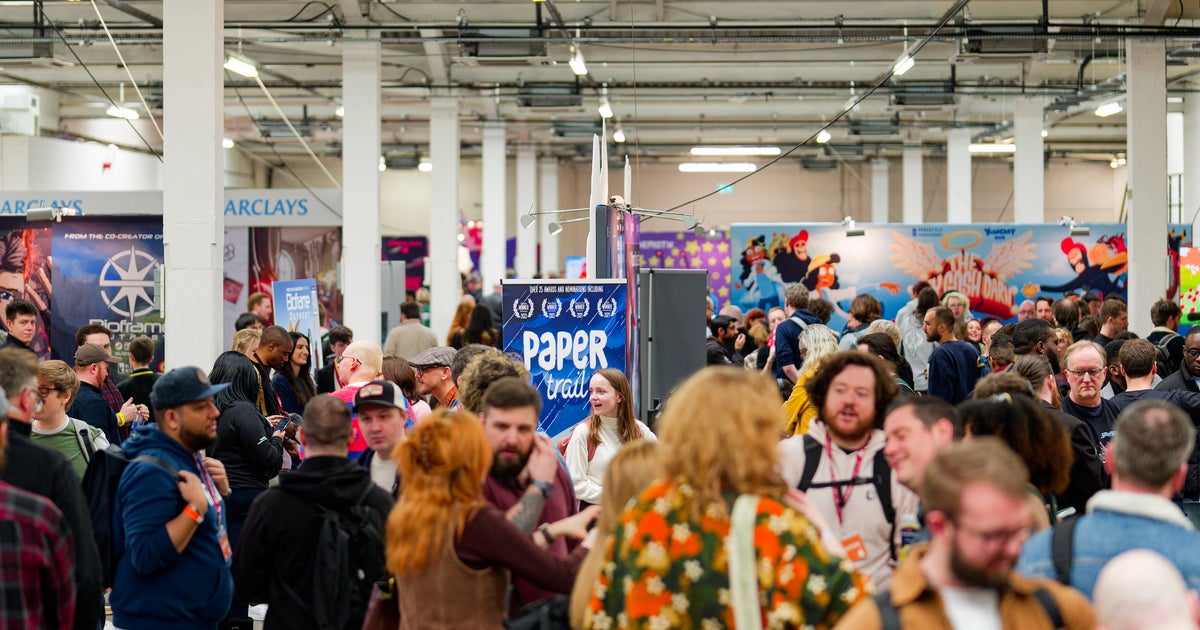
A recurring question in the UK games scene is why such a significant territory can’t sustain its own major consumer event, in the style of the USA’s PAX, Frances’s Paris Games Week or Germany’s Gamescom. The country’s largest video game consumer show, EGX, paused during COVID before being merged into the pop-culture behemoth of MCM Comic Con in 2024, while other major events like Insomnia, WASD, and EGX Rezzed have long since folded. (GamesIndustry.biz was formerly owned by MCM and EGX operator ReedPop.)
Subsequent attempts to launch new events have foundered. 2025 debut To The Moon was a conspicuous failure, with a sparsely populated show floor and low visitor numbers. Meanwhile, a mooted resurrection of the Insomnia Gaming Festival failed to get off the ground earlier this year owing to a lack of industry support.
The only successes have been smaller-scale – notably the various retro-focused markets and expos run by Replay Events and others, as well as shows like the Guildford Games Festival and the newly established, esports-focused DreamHack Birmingham. B2B events, meanwhile, have proved consistently successful, with an annual lineup that now includes Develop Brighton, Game Republic New Horizons, Pocket Gamer Connects London, and Adventure X.
But considering that the UK video games market is worth £8.7 billion, there’s a surprising lack of really big consumer shows – and certainly nothing on the scale of Gamescom in Germany, a country whose games market is actually smaller at €9.4 billion (£8.09 billion).
So what’s going on? Why is the UK struggling to keep hold of its big consumer shows? Are these kinds of events simply outdated in the post-COVID world of digital showcases, or is there a deeper problem?
Consumer demand
Games London head Michael French, who oversees New Game Plus at the London Games Festival (LGF), thinks that the pandemic was a watershed moment. “The industry around us has changed,” he says. “So the pretext to have an event is probably somewhat different now than it was even a few years ago. I think COVID is the thing to point out, where it sort of changed everyone’s budget, and then afterwards things never changed back.” Major exhibitors, chiefly AAA publishers, cut consumer events out of their marketing budgets and did not restore them when lockdowns ended.
This is despite that fact that demand for events hasn’t gone away. In fact, Jackie Mulligan – co-director of Game Republic, which puts on around a dozen UK events a year – thinks that after losing “two years of connection,” there’s been an even greater demand for in-person events since COVID. “I mean, we did an event with barely any advertising for consumers, and we had 6,000 people for a consumer show in Wakefield,” she says.
French agrees there’s still a demand. “Consumers really want an event, they love events,” he says. “There is a very passionate base of people that love these shows, and community groups that engage with them.”
Sponsors
The main reason the LGF has been able to thrive is that it is not reliant on exhibitor spend. “We’re in a very privileged position at London Games Festival, because we are publicly funded, which helps offset the risk,” explains French. As part of its Games Growth Package, the UK government has committed £1.5 million to the LGF over the next three years. “Obviously having that money comes with caveats,” he says. “New Game Plus is a bit more curated than other events… And then at the end of it, we do a lot of measuring on economic output and the economic impact of the event, which helps justify the public spending.”
Shows without access to public funds typically rely on one or two big sponsors to provide the necessary cash, he explains. “Ultimately, that sort of pays for everything, or at least helps you break even.”
When asked why the UK has been struggling to put on big consumer shows, David Lilley has an immediate response. “Money is the answer,” he says. “Events cost money. To do something like WASD will cost half a million pounds, and in order to do that, you need some form of underwriting.”

Lilley is now commercial director for Kudos Games Services, but previously he co-founded Roucan Events, the company behind WASD, and before that he was head of events at ReedPop, running EGX, EGX Rezzed, MCM Comic Con, and the GamesIndustry.biz B2B events.
“When we did EGX – which was big and bold and loud and brilliant – we had the support of PlayStation, Xbox, Nintendo, Square Enix, Warner Bros., Ubisoft, Sega,” he explains. “You had all of these people who were prepared to put their money behind supporting a UK event. Without first parties, it’s almost impossible to put events on.”
Smaller entities can’t offer the money that events require. Lilley singles out Devolver as being a great supporter of WASD. “Devolver were incredible,” he says. “And we got support from loads of fantastic indies. But it just isn’t enough. It’s not enough money.”
Lilley thinks the way that big companies divvy up their global marketing budget has changed. “It used to be GDC, E3, Gamescom, EGX, Paris [Games Week], Tokyo [Game Show] – those parties would get global budget. I don’t know who’s getting global budget now, because the industry has changed. So the event companies are not making the same money that they were making before – and events are largely about money, because your starting point is so expensive.”

French thinks that at least some of that global marketing budget is now being used on events in emerging territories. “I think they probably look at an event in LATAM [Latin America] or somewhere in an untouched part of Europe or Asia as a market they haven’t necessarily saturated,” he says. “Their priorities have changed as their budgets have shifted.”
He points out that the UK market is “incredibly established and sophisticated and mature”, with limited room for growth, but emphasises that it still needs support. “I think that a lot of those big companies have forgotten that support for these events and programs, no matter where they are, is supporting that ecosystem. It goes back into it, and those audiences are the next generation of customers for those companies. So they’ve sort of fallen out of the habit of realising that ‘if we show up to an event, it’s an investment in our future.'”
Rising costs
The overwhelming expense of putting on an event is venue hire, which has rapidly increased in recent years, to a level that Game Republic co-director Jamie Sefton describes as “astronomical”. “The reason why we didn’t have a GaMaYo [Game Makers Yorkshire] for so long in Leeds was because we couldn’t find a venue in Leeds city centre that was good – say, 10-15 minutes from the station – but that wasn’t going to cripple us financially,” he says.
“The price of venues has definitely gone up,” says French, adding that there have also been steep rises in the cost of staff, food, hotels, and various other things. “They’ve all gone up in line with all the cost of living issues, and exacerbated by Brexit.”
“I think those price rises have happened globally,” he adds, “but we’ve really felt it.”

Mulligan agrees that the price of drinks and food has been particularly impacted by Brexit, and she also points to the surging costs for travel, as well as the increased bureaucracy involved when bringing speakers into the country. Craig Fletcher – who founded Multiplay, the company behind Insomnia – concurs. “Suddenly you have terms that people haven’t heard for 40 years cropping up, like ‘carnet’. Most people have to actually look up what a carnet is.”
He points to one thing in particular that has shot up in price. “Tables went up massively,” he says. “We had to rent a thousand tables back in the day when we had 2,000 people for Insomnia. If suddenly that goes up by four times, that’s a lot.”

Fletcher says this ultimately proved fatal for Insomnia. “We just couldn’t succeed at getting the costs down, because you’d find a way to save a cost somewhere else, and another one would’ve increased. It’s like trying to put a carpet down and one corner’s always coming up, and to do the same level of quality just cost way more.”
He points out that for a lot of events, the ticket sales alone don’t cover the operating costs – and it can be a tricky proposition to raise prices. “The problem is, are people prepared to pay the price that it would be to put it on?”
The Gamescom gravity well
The rise of Gamescom, which last year attracted 357,000 visitors, has also had a detrimental effect on the UK events scene by drawing all the attention to Germany. “If you’re a company with less money to spend, then it makes sense to pick one big European event,” says French. “As well as having those business halls, it feels like all of the German consumers show up to Gamescom.”
“I think Gamescom just won, frankly,” declares Fletcher. “People just got used to just doing all their consumer stuff at Gamescom,” to the point that’s almost unstoppable. “Once there’s so many people going from the industry to an event, everyone else feels like they have to go. It’s almost FOMO.”
He says that because people feel like they have to be there for the B2B side, it makes sense for them to extend their B2C reach at the same event. “It makes it an easier decision, because once you’ve mobilised your resources to deliver an event, doing more is cheaper. You’re already sending staff there, you’re already booking travel, you’re already sending trucks, you’re already booking hotels. Your mobilisation costs have already happened.”

Gamescom also benefits from government support, being co-organised by Game, the German games industry association, and Lilley says the city of Cologne participates by offering it fixed-price hotel rooms – reducing another significant operating expense.
French thinks the UK trade bodies, UKIE and TIGA, should be doing more to support UK events. “We have good relationships with both of them,” he says, “but I think there’s more to do… the flip side is for some of the big companies, the decision-making has left the UK. Decades ago, for some of them, when they moved headquarters to places like Geneva and Germany. Which probably explains why some momentum moved towards Gamescom.”
The future
In terms of where UK consumer events go from here, Fletcher says that recent failures have made the situation worse. “A big problem is people have had their confidence knocked multiple times now with events being cancelled,” he says. “These events starting then failing just makes it harder for everyone else: not just to convince consumers that this is actually going to happen, but also [to convince] any of the potential commercial partners.”
Lilley emphasises that any new events starting up shouldn’t try to go toe to toe with Gamescom by putting on a huge-scale exhibition. “You can’t compete, so don’t,” he says. “If I was to give a recommendation to anyone, I would suggest start small, grow sustainably, and then you’ve got a chance to do something big. Going from naught to a hundred is impossible. We didn’t do that with EGX. EGX grew over 15 years.”

Mulligan says that one trend she’s seen is games being integrated into other events, like film or music festivals. “I think that’s a good thing,” she says, adding that it shows how games have gone mainstream. But in terms of standalone games shows, Sefton thinks that they should be tightly focused. “You really have to know your audience. It worries me seeing an event and they say, ‘Oh, this event’s for everybody’. And I’m thinking, ‘Oh God, are you sure about that?'”
He points to Game Republic’s WX Games Weekend being focused around families, while Replay Events specialises in retro, and a general drift away from queuing up to play demos of new games – which attendees could just as easily play on Steam in the comfort of their own homes – and towards celebrating fandom.
He says he was inspired by visiting PAX in the United States around eight years ago. “That was a bit of an epiphany for me,” he says. “It’s focused on community. You had rooms at PAX where you had people who were passionate about one game – a whole room with ten Steel Battalion controllers set up and about 30 people in there, and it was just for everybody around the world who loved that game.”
But there still remains the question of money. “Events are hard to fund,” says Lilley. “I’ve been burned by that, and I don’t think there’s anything that would get me back to doing events at the moment, because it’s not enough to have the will and it’s not enough to work hard, you’ve got to have the funding to make them profitable: it’s the only way.”
