
.png?width=1200&height=630&fit=crop&enable=upscale&auto=webp "Esports consultancy The Story Mob rebrands to “strategic player culture advisory”")



This article concludes ExDev Week. You can find previous articles here.
Following stints in government work, fundraising, and finance, Mitch Patterson founded Wolfjaw Studios in 2018 after becoming interested in co-development studios. “What I found was a lot of them just did anything for anybody,” he says. “They did art, they did QA, they did gameplay, they did backend, they did websites. And I was like, I’m going to do it, but I’m going to do it based on what game studios don’t actually want to work on.”
In other words, Wolfjaw would handle the kind of backend infrastructure that developers often deliberately shove down their to-do lists. “All the boring stuff that is pretty essential to the game, but nobody actually touches,” Patterson explains.
“People that work at game studios are artists, they’re creatives, and they want to make games. They want to present someone with a piece of art. What they don’t want to do is worry about account systems and leaderboards and matchmaking.”
Since then, Wolfjaw – which is based in Troy, New York – has quietly built up an enviable portfolio of big-name clients, including Unity, Bungie, Take-Two Interactive, Riot Games and Electronic Arts. The studio has worked on huge franchises like Destiny 2, Marathon, the NBA 2K and WWE 2K games, Subnautica, Among Us, and Apex Legends. But throughout, Wolfjaw has remained very much in the background, content to prop up the success of others rather than steal the limelight – or make its own games.
Whether external development studios should also work on original titles is something of a debate in exdev circles, but Patterson has a firm take on the matter. “I feel like I’m the only person in games that doesn’t want to make their own game,”he says. “Everyone is always like, ‘You don’t want to make a game?’ And I’m like, ‘I make plenty of games’.”
“I just like to problem-solve and make games work. I’m not a creative. I like spreadsheets, stuff like that.” In fact, for an exdev studio, he thinks making your own IP is a “very dangerous road to go down” that can turn into “a big distraction and a big financial cost,” which could ultimately kill the studio.
“It’s easier than ever to make a game, but harder than ever to be successful,” he says.
Stability
In contrast to creating original games, backend infrastructure work is relatively stable and long term, and can extend for years after a game is launched. Patterson says Wolfjaw has been working with NBA 2K for six years now, with Innersloth for five, and with Bungie for four. “We’re working on a very large contract extension with all of them, so we kind of become part of their team.”

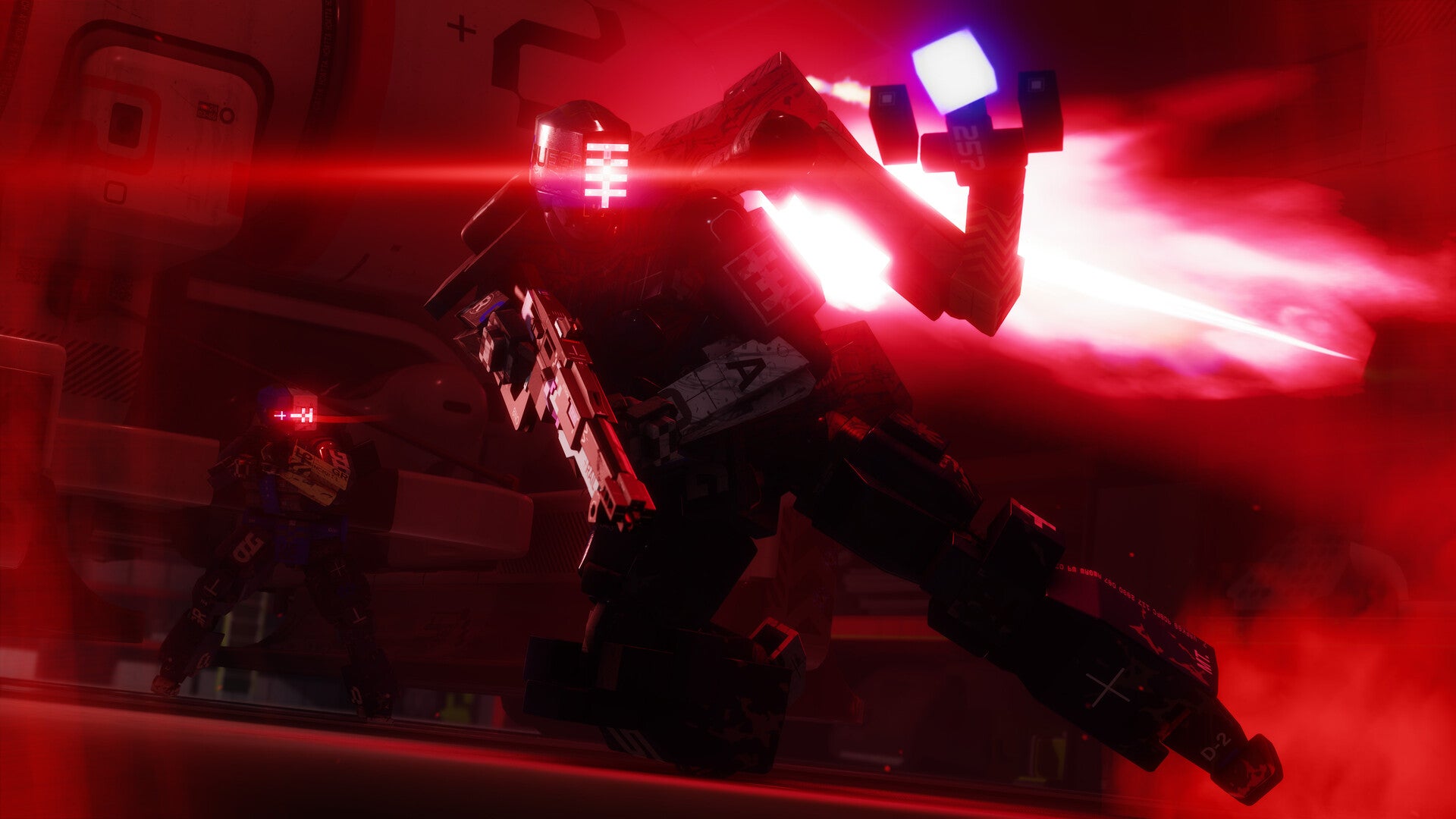
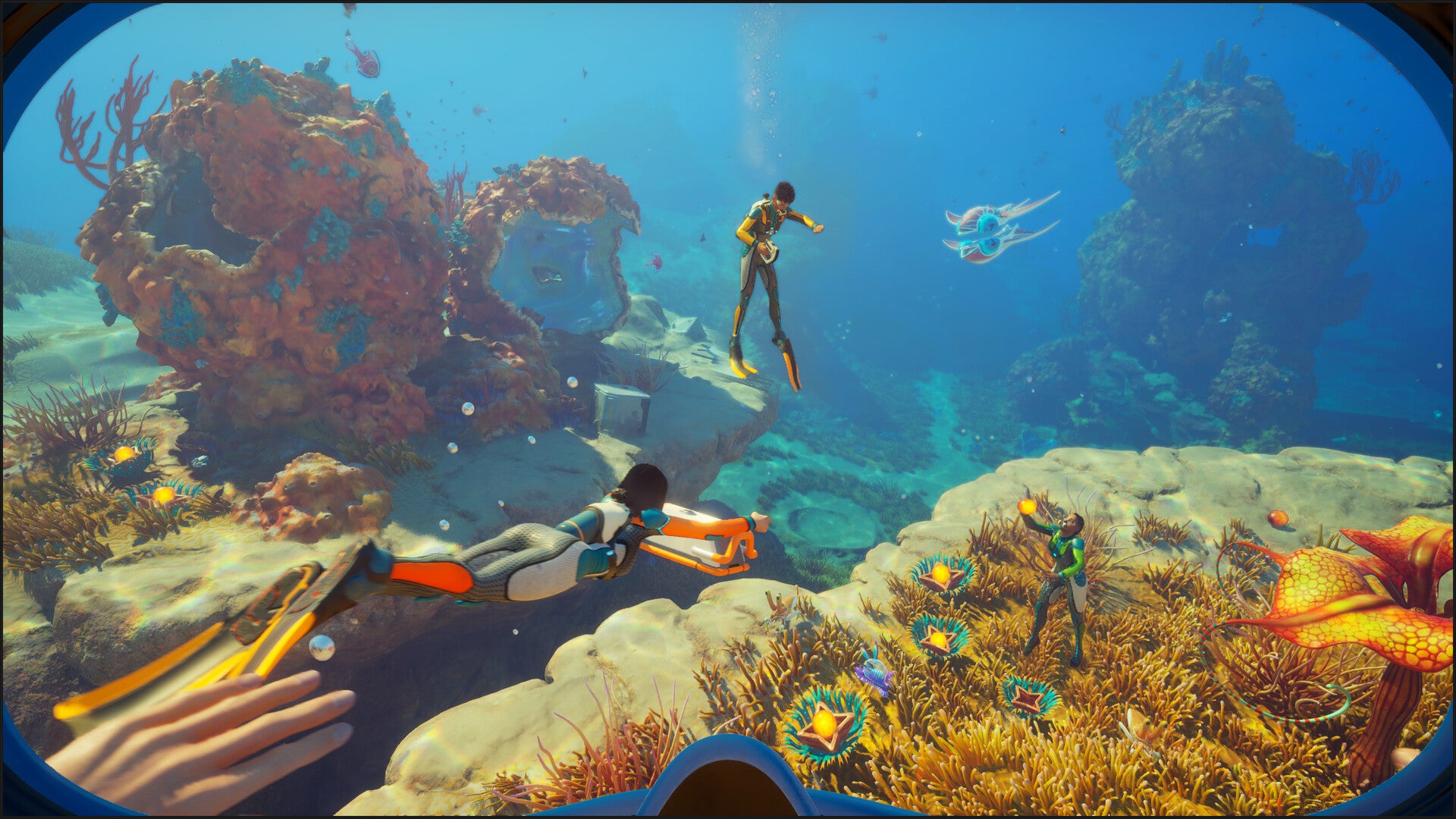
Just this year, Wolfjaw worked on the launch of WWE 2K26, Subnautica 2, and Marathon, and has two more launches to come. Its work on Marathon commenced long before the game was announced, and with even knowing what game it was. “They were like, ‘Oh, we don’t have art assets yet, so we’re just using some old assets [from the 1995 game Marathon]’. Later, we found out it was because we were making Marathon. It’s like, you guys could be honest with me, I won’t tell anybody!”
“When we first started the project, the idea was: ‘Let’s take everything from Destiny and just reuse it’,” he continues. “And then it quickly became, ‘Wait, you just can’t take 12-year-old technology and repurpose it for a brand new game’.” In the end, Wolfjaw’s backend work involved a mixture of legacy technology and new solutions.
And the studio’s biggest sign of success is that no one notices the work they are doing. Things like server management only tend to get picked up by players when they go wrong. “There have been no headlines about games we’ve worked on where the games are crashing,” says Patterson, proudly. Wolfjaw did the server scaling for Subnautica 2 – “We were expecting 250,000 concurrents at peak, and we hit 800,000” – yet despite the game’s huge launch, outcry about players being unable to get online was noticeable by its absence.
“There have been no headlines about games we’ve worked on where the games are crashing”
Of course, it’s hardly glamorous work. But the heavily technical, code-based nature of it means Wolfjaw can look outside the games industry when hiring, finding people who are content to work in the shadows. “We can bring in people that come from banking,” notes Patterson.
But it’s not all plain sailing, and Wolfjaw isn’t unaffected by the prevailing winds of the games industry. Patterson says they’re in the process of modernizing the business, and the studio underwent layoffs earlier this year. “We’ve reduced staff to some degree after a couple of big game launches, but we’re also negotiating some contracts and expecting some teams to scale back up in the coming months,” he says.
Trust
Wolfjaw typically finds its clients through word of mouth. “Games is a very small industry,” says Patterson. “So the quality of our work kind of speaks for itself.”
“The typical way we get a client is someone that worked we worked with at EA or Take-Two moves to ‘fill-in-the-blank’ publisher/studio, and when a problem arises, they can just trust that we’ll get the job done.”
Trust is something that came top of the list of the most important assets for an exdev studio in our recent feature, and Patterson notes there was an influx of inexperienced operators into the live-service scene during the gaming boom of the COVID years. “A lot of people saw that as an opportunity, and got into the space without actually having the skills, or were trying to sell products that weren’t actually good.”
Wolfjaw, meanwhile, has steadily built a reputation for being reliable – and realistic. “We don’t sell anything that says, ‘Hey, use this and this will solve all of your problems’ – I don’t think that works,” says Patterson. “We focus on figuring out a custom backend system and architecture.”
“Server orchestration and latency is something that I’m still amazed many of the big AAA publishers are not good at”
More generally, he has witnessed plenty of bad practices across the industry. “Server orchestration and latency is something that I’m still amazed many of the big AAA publishers are not good at – and they’re going to need to start getting good at it.” Patterson points out the rise of markets like South America and India, and the corresponding need to take into account the nuances of mobile architecture and widely varying internet speeds.
“It’s crazy to me so many of them are still like, ‘I can build for this exact platform and nothing else, and this exact internet and nothing else’.”
He sees the sheer variety of big-name titles Wolfjaw has worked on is the studio’s biggest strength. There’s no substitute for experience.
“When I started the company, one of the things someone told me was, ‘Well, if you sign 2K, no one else is going to work with you, because you have access to so-and-so’s backend – they don’t want this information being shared’,” he recalls. “But it turned into a superpower, because while we don’t share that information, we’ve run into so many different environments and so many different experiences.”
Now, having worked with games made in numerous coding languages and “dozens” of proprietary engines, the team is able to quickly problem solve by applying knowledge from earlier projects, as well as warn clients about potential pitfalls.
“It’s funny, Unreal gets so much press, but the majority of AAA games are on proprietary engines still to this day,” says Patterson. “Some of them are written in custom versions of languages, which is crazy.”
End of the AAA road
Now, Wolfjaw wants to get the word out that there are better ways to go about things. “I feel like there’s still a lot that needs to be done, and while the games industry has gone through craziness from COVID, and massive amounts of money being invested, and all of these giant studios, and all of these fires, all of these games flopping, and all of these systems breaking down, we’ve been building our brand, building our reputation, building our knowledge and experience, and now we want to start telling people: ‘Hey, you can do this on a $10 million budget. You can do this without having to do all of these crazy things’.
“I’ve run into a lot of people who have come from the machine of AAA publishers, and they only know how to make a game that costs $500 million”
“So the big thing we want to start doing is finding ways to work with more people and make an impact on games. And right now, I just don’t feel like we’re done yet. I’ve run into a lot of people who have come from the machine of AAA publishers, and they only know how to make a game that costs $500 million. They only know how to do certain things – and we’re going to have to reeducate some of those folks. But there’s a lot of other folks that are coming into this space. I truly believe the next big game and genre will not come from a AAA publisher.”

Given that, Wolfjaw has been working on a much more affordable backend system. “When we build a backend, when you build an account system, 75% of it is pretty much the same thing you’re doing every time,” Patterson explains. “So what we’re trying to do is build some code-source-available tool that will allow people to build their own backend a little cheaper, or utilize us to do it in a much faster way, so that we can start working with two or three person shops.”
He says Wolfjaw has been working with Notorious Studios on a pilot of the project. “We’re trying to figure out a way of how we build for it and how we make it work,” he says, “where you take it, build it, fork it, modify it all you want. If you’re super successful, we’ll take a little cut. If not, that’s fine. So we’re trying to find ways to go downstream and allow these people to make a game for $5 million or $2 million as opposed to, ‘I need $300 million to make a game’.”
He says it’s clear that the ever-ballooning budgets of AAA games are unsustainable. “I think we’ve hit the end of the ‘$500 million games are the only way to go’.”
.png?width=2048&height=2048&fit=bounds&quality=85&format=jpg&auto=webp)
Kevin Robertson – Wolfjaw’s VP of business development and strategy, who previously worked in investment at Tencent and at the venture capital firm Bitkraft – agrees that good games don’t have to cost the earth. “I was in the eye of the storm of seeing the bloviation, seeing the fake-it-till-you-make-it, seeing all this chatter and marketing, and it’s all kind of farcical. And you find this team based in upstate New York that’s just blue collar, building some of the biggest games in the planet, and supporting the most players on the planet by far out of anybody working in this space, and just quietly and humbly going about its business.
“And we have a challenge – and this has been my challenge this year – to continue to be this humble blue collar team, but start to tell our story to the world that, one, we exist, but two, we are for real. This is not some fake-it-to-make-it technology that might fall over if it hits 12,000 CCU. We’re building some major stuff.”
He acknowledges that getting the word out is a challenge. “It’s hard to make the backend sexy,” he says. “But I think there’s something about this team and this group of people building some really amazing things in an unsung fashion that nobody really knows about.”
