



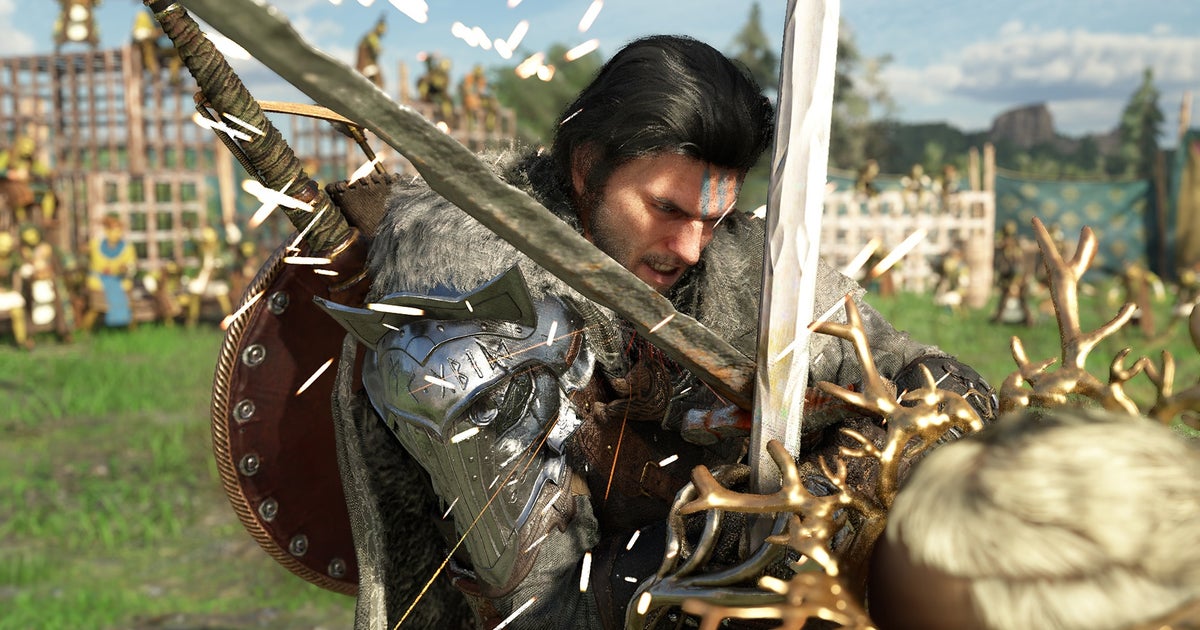
Pearl Abyss reported a weaker second quarter as the initial impact of Crimson Desert’s March launch has tapered off.
Operating revenue and profit declined quarter-on-quarter after a 419.8% surge in first-quarter earnings.
Operating revenue was down 41.4% to ₩192.6 billion ($135.9 million) while operating profit decreased 68.1% to ₩67.6 billion ($47.7 million). Net profit also fell 58.3% to ₩70.9 billion ($50 million).
The firm’s second-quarter performance fell short of previous guidance, which it attributed to “sales splits across distribution channels for Crimson Desert, regional pricing strategy differences, time lags between sell-through and revenue recognition for physical packages, and revenue deferrals for refund guarantees.”
By region, North America and Europe contributed 75% of revenue, followed by Asia at 16% and Korea at 9%. By platform, PC generated 61%, console 34%, and mobile 5%. The console share stayed high, with Crimson Desert representing about 70% of total revenue.
Crimson Desert sold 2.11 million copies in the second quarter, generating ₩136.1 billion ($96 million) in revenue. Digital sales comprised 82% of total units sold, while physical copies accounted for 18%.
Pearl Abyss is developing DLC for the open-world RPG, with a release date to be announced in the third quarter. The developer is also expanding to new platforms, having reached a “playable baseline” on Nintendo Switch 2 and targeting a launch in the first half of 2027.
The Black Desert franchise generated ₩55 billion ($38.8 million), a slight decrease as operations focused on “content optimisation rather than major expansions.”
Looking ahead, Pearl Abyss has updated its full-year guidance. Operating revenue is expected to range from ₩709.8 billion ($501 million) to ₩743.8 billion ($525 million), with operating profit projected between ₩315.5 billion ($222.7 million) and ₩345.2 billion ($243.6 million).
Two new titles, DokeV and Plan 8, are in development. DokeV is scheduled for release in the second half of 2028. Pearl Abyss aims to maintain a “consistent release cycle of every two to three years” for its games.
