


No event has come back more strongly from its pandemic-enforced hiatus than Gamescom. The German event posted record attendance this year, driven in part by business attendance boosted by the demise of E3; its two-year-old South American spinoff Gamescom LatAm claimed an audience of 175,000, up 17% over the previous year. This week is Gamescom Asia x Thailand Game Show, which has also scaled rapidly from its launch in 2021: the 2026 edition will host visitors from 29 countries, contain 20 national pavilions and is aiming welcome more than last year’s total of 206,000 attendees to its expanded show floor.
The scale is driven by the show’s unity of business and consumer audiences, which project director Daria La Velle describes as a filling a gap in the Asian market amid established events like Tokyo Game Show and the rapidly-rising BitSummit. That lead to a partnership with the 18-year-old consumer event Thailand Game Show, prompting a relocation from Singapore to Bangkok in 2024. That has been followed by a further partnership this year with anime event Ace Bangkok, which accounts for half of the additional show floor added to this year’s event.
The rest, says La Velle, comes from publishers and developers – both local and international, and chiefly PC and console focused, who are drawn by a robust range of networking and investment functions alongside a four-stage, 70-person B2B speaker lineup including John Romero, Despatch developer AdHoc studio and Rovio.
“There are definitely more publishers and developers from Asia,” La Velle tells GamesIndustry.biz, “especially Japan, China, Korea, but also Southeast Asia.” She points to early exhibition space booked by Japanese clients including Playstation, Nintendo (represented by local licensee Synnex) Capcom, Bandai Namco, Sega and The Pokémon Company. “But we are also seeing exhibitors coming from the US, from Europe, or even as far as South America. We have country pavilions that we didn’t have last year, like Germany, Austria, the Philippines.” Business attendees split roughly 40/60 between Thailand and international, she says.
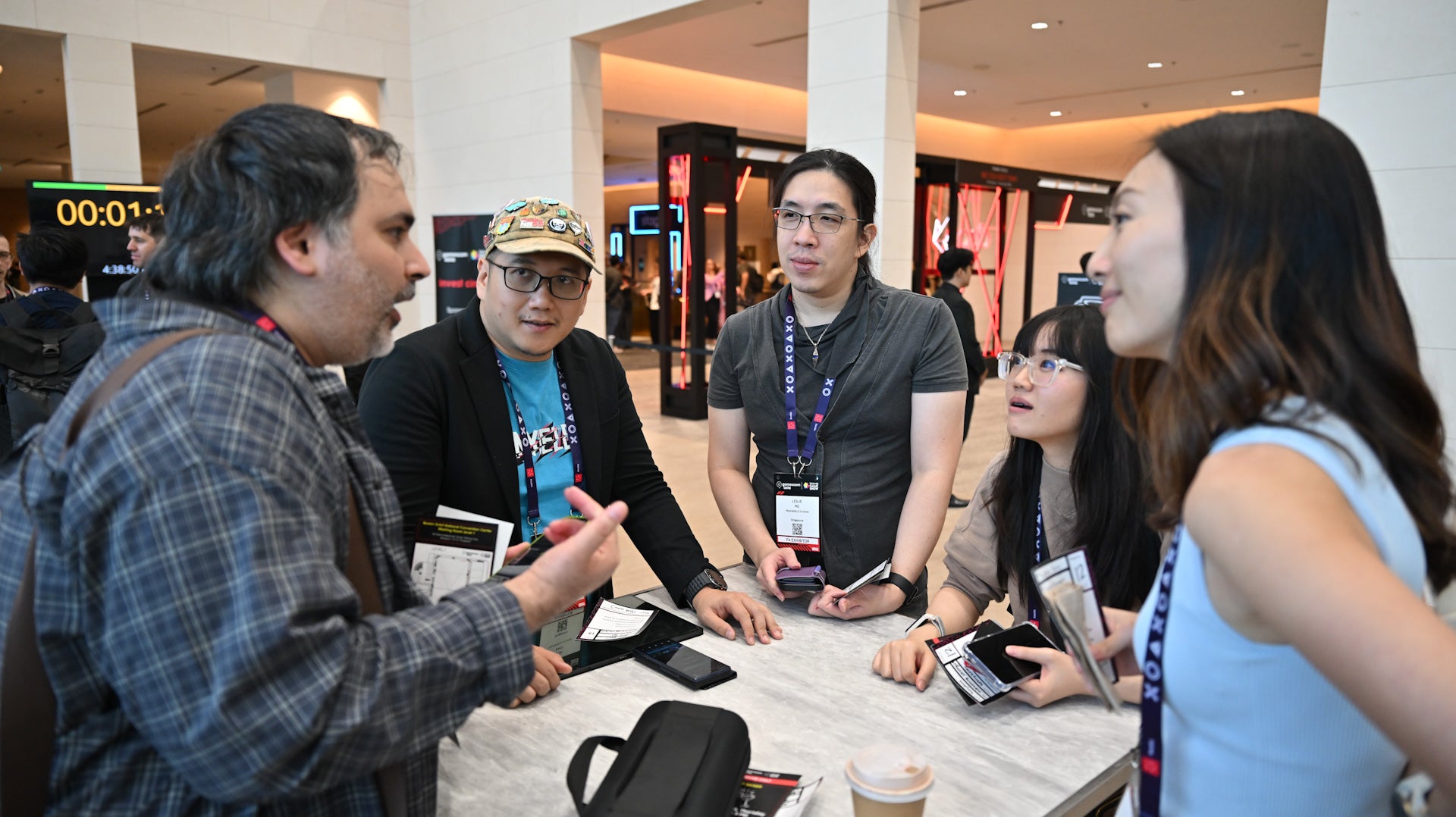
The show seeks to bring the Gamescom experience to an audience who know the brand – the international clout of which “definitely opens doors” – but aren’t able to make the trip to Germany. “The number of attendees that come from Asia Pacific is still a relatively low compared to the number of attendees that come from Europe and the US and South America,” says La Velle of the German show, with the cost of attendance being a major factor for small teams in nations like the Philippines, Indonesia or Thailand. “So instead of traveling to Gamescom, we tried to bring the Gamescom experience to their shows basically, to their backyard.”
While the title is simply Gamescom Asia – reflecting a potential audience containing some of the fastest-growing games markets on the planet, on which the organisers clearly have an eye – the show’s current focus is just South Asia. This is a broad and somewhat noisy community, encompassing ten nations each with different languages and audience habits, many of them maintaining a strong preference for physical releases. The show seeks to provide a space for all of them, a factor which supported the merger with the adjacent Thailand event – removing the need to local firms to decide which to attend, while reducing the attendance costs which represented a significant expense for smaller studios.
La Velle is seeing rapid growth in indie development across South Asia. Alongside youthful startups, large co-development houses in those territories are spawning indie spin-offs, particularly in Singapore, which has actively courted larger firms to set up APAC offices in the territory and is now seeing smaller startups rise.
Indie outreach at the event includes a dedicated showfloor area, along with a pitching competition. This gives developers from all nations the opportunity to get in front of publishers and investors, with cash prizes for the top three. More retiring souls can stick to a speed-dating round for developers, publishers and investors; new for 2026 is a role reversal in which a selection of publishers have been invited to pitch themselves to developers. La Velle says this is driven by escalating publisher demand for new titles, although it also chimes with wider developer interest in self-publishing.
With the B2C audience expanding and an increasing number of notable names on the B2B attendee list, the organisers are understandably bullish about the show’s prospects. The “north star”, says La Velle, is to cover all of Asia, but for now “at the fundamental level, we are a show for Southeast Asia’s games industry and its fans.” It’s also, she says, a place where Western publishers and investors can tap into the burgeoning local development scene in search of their next signing.
“You want to find the next big thing in games, I would say, don’t stay in your offices in Europe or in the US waiting for somebody to visit you. Hop on a plane and come to Bangkok and meet all the indies, as well as the AAs that will be coming to the show.”