


Alex Avard is a project manager at Playing for the Planet, working with the alliance’s 54 members across decarbonisation, storytelling, and more to facilitate collaborations on projects such as its Carbon Calculator, Sustainable Games Events Guide, and recent report on climate storytelling, Beyond the Endgame.
Earlier this year, I joined a volunteer group that shepherded hundreds of toads safely across traffic towards their ancestral breeding grounds. Patrolling up and down that road during those rainy Somerset evenings, torch and bucket in hand, I found myself forming a genuine affection for a creature I had previously given little thought to, anchored in precious, firsthand encounters with their way of life.
I enjoyed discovering that toads don’t croak, but chirp, for example, and delighted in watching the males hitch a lift on the back of their chosen partner in an amphibious embrace known as amplexus. I came to appreciate these toads by spending time with them, in other words, which in turn has only strengthened my commitment to continue supporting their survival in future.
Unfortunately, these kinds of positive feedback loops in the global relationship between humans and nature are increasingly rare. As people spend more time indoors and less time with the natural world outside their doorstep – driven by shifts in work patterns, lifestyle habits, and other social factors – species literacy has reached record lows in many countries. A recent UK survey from 2019 found that 50% of children could not identify stinging nettles, while 83% no longer knew what a bumblebee looked like.
This is a problem, because nature needs our help more than ever, but we cannot save what we do not know. Worse still, the huge biodiversity losses we’ve seen across our lifetimes have pushed nature to the periphery, limiting exposure and access for many. In this way, the decline of nature and the decline of our connection to nature are locked in a vicious cycle; its presence in our lives diminishes, so we lose sight of its continued collapse, and fail to take meaningful action against it diminishing ever further.

This, in a strange sort of way, brings us to Grand Theft Auto 6, which might just be about to play a small part in helping to restore that severed connection. Rockstar’s latest open-world epic boasts an unprecedented depth of simulation when it comes to the southern Florida region on which it is based, from its unique subtropical climate down to its world-famous wildlife. The game will feature over 170 different species of animals, from manatees to rhesus macaque monkeys, alongside dynamic, real-time weather effects such as hurricanes and tropical storms.
Given that the game is expected to sell tens of millions of copies before year end, it’s not hard to imagine GTA 6 catalysing its own variation of an Attenborough effect, elevating nature’s standing in the public consciousness by spotlighting it on the small screens of countless homes around the world. This hypothesis isn’t short on evidence, either: there is precedence in another tentpole franchise from Rockstar with a similarly detailed open world.

2019’s Red Dead Redemption 2, set in rural America at the tail end of the 19th century, contains over 200 animal species, each exhibiting life-like behaviours and dynamic interactions (from possums playing dead to bears performing bluff charges). Perhaps unsurprisingly, the game has sparked something of a wonder for the natural world among its fanbase.
Players have enjoyed in-game birdwatching, created comprehensive nature documentaries, and role-played as conservationists via Red Dead Online’s Naturalist vocation. Research from the University of Exeter, meanwhile, found that Red Dead Redemption 2’s simulation enhanced species identification in players, who could identify – on average – three more animals from photos than non-players.
It’s worth noting that Rockstar never set out to intentionally create a piece of nature “edutainment” here. These outcomes are merely a side effect of the studio’s industry-leading dedication to authenticity, detail, and scope in open world design, yet the educational impact of those side effects speaks for itself. But if games such as these are already operating as effective vectors for nature education, how might other studios amplify that potential for even greater impact?

The answer, I think, is going beyond simply simulating flora and fauna, and instead building dynamic worlds and gameplay systems that more deeply and critically examine the player’s own relationship to nature, where any learning about the natural world is also twinned with an impartation of our responsibility to care for it.
Part of the genius and wonder of video games is their capacity to empower and involve players within their worlds and stories via the interactive relationship established between them. In a game like Horizon: Forbidden West, I’m not just watching Aloy forge allegiances and build coalitions to address a world-ending threat, I’m an integral part of it. My agency as Aloy, acting as a catalyst for change, demands my conscious investment in the long and difficult work of social progress, which in this case involves searching for new allies and winning them over to a collective effort to end a corruptive plague that threatens the entire ecosystem.
Games also possess an equally powerful relationship with time. I can tend to a garden in Minecraft and visibly see the impact of my care as a planted seed eventually sprouts into a fully grown plant. Or, to return to Red Dead Redemption 2, I can help a logging foreman protect his workers from wolves, and return later to find that the entire woodland has been deforested. By utilising the ‘live’ aspect of their interactivity, games are thus able to simulate the passage of time, and our impact on the natural world over time, in a manner that can’t be replicated by other media.
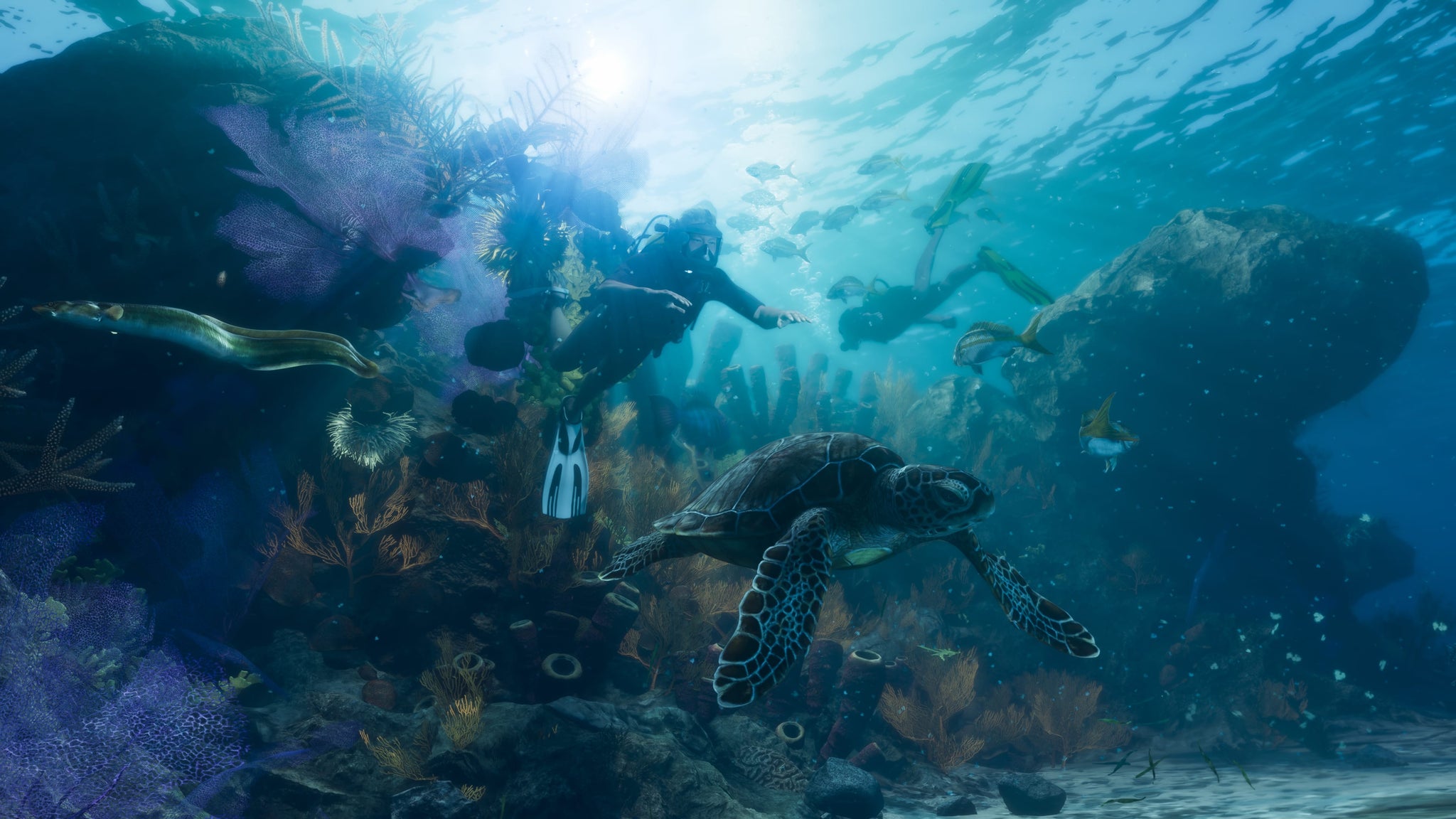
Taken together, it’s clear that games are very effective at both liberating the player to engage in meaningful action and allowing them to see how such actions facilitate change, both immediately and in the long term. With regards to nature, then, every game can celebrate the beauty and dynamism of the natural world, but we also need games that aren’t afraid to acknowledge our culpability for its decline, while also empowering the player to begin the work of reversing that decline through their in-game agency.
“Our survey of 380,000 players found 81% saying they would like to see more environmental content in their games”
Some may argue that such experiences would lack commercial viability, but polling suggests otherwise. A landmark report from More In Common last year found that respect for nature emerged as a “unifying” value that cuts across demographic strata in the UK, while our own 2022 survey of 380,000 players found 81% saying they would like to see more environmental content in their games.
At Playing for the Planet, which is facilitated by the United Nations Environment Programme, we believe that games have a crucial role to play in shaping the culture that runs upstream from social and political transformation. It’s why we run the Green Game Jam every year, where participating studios create environmentally themed game content in live games with existing audiences, designed to shift mindsets but ultimately equip and encourage players to take positive, pro-environmental action in the real world. Studios that participate tend to return each year, encouraged by the positive engagement they receive from their players, and a genuine excitement to work on something that can have tangible impact for the planet.
GTA 6 showcases what’s possible in terms of connecting players with the natural world at scale, and next year’s jam thus presents an opportune moment for studios to go even deeper in exploring this potential. Because once the industry harnesses the power of that potential, its worlds and stories can play an important part in moving us back towards a regenerative relationship with the only planet that we call home.