
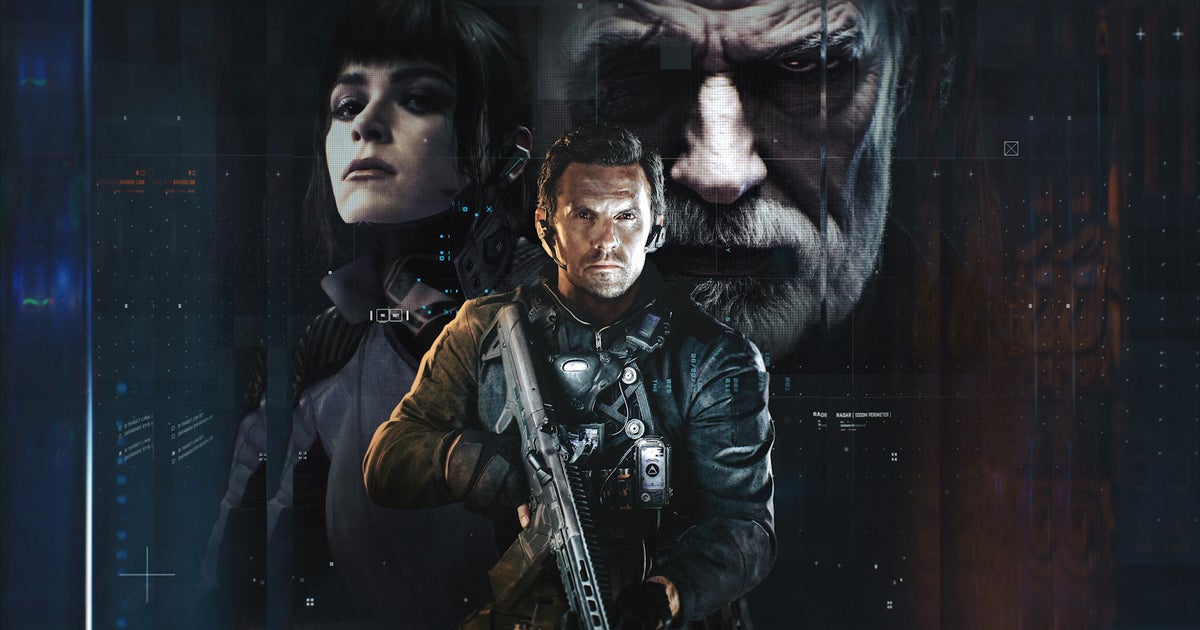



The idea of an anime-style soulslike releases plenty of good chemicals in my brain, but the first Code Vein back in 2019 turned out to be just okay in my book. Like a number of Bandai Namco’s original IP, I was intrigued to see that idea get another shot, which made me optimistic for Code Vein 2. However, with a middling execution of its open world and inconsistent gameplay qualities, this sequel doesn’t necessarily improve upon its predecessor, and instead struggles to stand out in a somewhat saturated genre. Its story premise still compelled me through the 50 hours I spent to finish the main quest and all of the side content at least, but that time came with a lot of ups and downs.
Coming off of From Software’s Elden Ring (which Bandai Namco published) not too long ago, pulling up the map of Code Vein 2 had me intimidated and enticed in equal measure. A few hours past its opening act, I was able to grasp its cadence and scale, which thankfully wasn’t as overwhelming as I initially thought. A big part of what pulled me in was its concept: a time travel story where you repair a post-apocalyptic present by going to the past to change the outcomes of pivotal moments in its history. Having an open world that subtly changes between timelines drives home a sense of place and the feeling that your character’s actions have an impact, even if you’re simply following your quest objectives.
Looking out to the horizon from the tower on Magmell Island (the starting region) as your leader Lady Lavinia lays down some exposition, you see the land itself transform upon completing the prologue’s quest; it’s a strong moment that shows promise for the road ahead. You’re then asked to go back in time to aid the three heroes of the world’s past in their respective regions to alter their fate, and I enjoyed the fact that you get to take part in shifting the conflicts that led to the present day’s destruction.
However, its storytelling style sells itself short at times, with key moments for its major characters relegated to barren dream-like visions – vague dialogue gets overlaid as you stand there waiting for the next set of static character models to appear. It’s hard to get a real gauge of what’s happening or feel the gravity of the situations the story is trying to portray. It’s evident in other dialogue sequences that the writing in Code Vein 2 is rather generic and missing some of the personality that would draw me in to care about the world I’m supposed to be fighting for. In the rare fully animated cutscenes that tee up certain battles, however, Code Vein 2 shows great potential and had me hyped for the moment, but like its many parts, the momentum ends just as quickly as it starts.
I do like a handful of the star characters – for example, Lou being the frail girl who has the time traveling power is an extension of your created silent protagonist, and she carries a convincing sense of sorrow. The three heroes have fitting backgrounds and are nice to team up with, too; Holly is a standout for her story as a gifted doctor put in tragic situations because it’s one of the few times Code Vein 2 hits a genuine emotional note. As a whole, though, I wanted to care more about the broader struggle between revenants and humans, and the dynamics that led to so much conflict and the monsters that roam the land, but the plot threads run shallow and the way they’re delivered leaves them underdeveloped. As a consequence, I came away from its conclusion fairly underwhelmed even as it tried to pull on my heart strings since I wasn’t quite invested as it seemed to hope I would be.
I do think the open world serves its purpose as a vehicle for giving the story some impact. It struck a chord with me to visit a particular location in the before-times, seeing where people struggled to eke out an existence and then that same place dilapidated in the present. The Undead Forest’s lush greenery turning to a cold barren wasteland is one of the starkest examples of this; the differences aren’t drastic from a gameplay standpoint, but it’s visually effective for showing the lifelessness of the present day.
Navigating the open world is sometimes a pain, though. You get a motorbike to drive around, and it controls like a flimsy RC car – you can glide in the air by deploying its wings, only to be met with a few invisible walls blocking you from entering parts of the map that are clearly accessible (you just have to enter from where you’re supposed to). And certain falls that just don’t seem like a problem result in automatic death. These seem like minor inconveniences, but they compound with several other ways that Code Vein 2 seems sloppy.
Some of the vistas are quite impressive on a macro level, but the closer you get to the details, the more you see how muddy everything looks. It’s quite jarring, especially as nearly every cutscene would constantly load textures in and out every time the camera cuts to a different angle. And even playing on a PS5 Pro with performance priority mode on, the frame rate fluctuates wildly and oftentimes not even when the action gets hot.
There isn’t much mystery or intrinsic reward to exploration, although once you understand what certain landmarks entail, you’ll find critical upgrades to your healing item, materials for weapon upgrades, and persistent stat buffs for specific regions. You’re not left completely empty-handed, just don’t expect to stumble upon interesting dungeons, bosses, or rabbit holes that evoke your curiosity. I am glad that the open world is rather trim rather than being padded out with a bunch of checklist objectives, and important side quests are clearly delineated in the quest log.
Much like my sentiments about the story and open world, Code Vein 2’s combat bounces around wildly in quality. It uses the design principles of the Souls-style games – experience points and currency that disappear upon death (and must be recovered), enemies respawning after hitting save points, and punishing combat that moves at a deliberate pace, among other typical mechanics. While I’ve experienced a bit of fatigue from games in this realm, I still lock in once I pick up what it’s putting down and begin to understand its systems. There were times in Code Vein 2 where I felt close to the highs I got from others in the genre (although I wouldn’t compare them to my favorites like Bloodborne or Sekiro: Shadows Die Twice).
A couple of bosses feature creative mechanics that are super tough but fair, conquerable by fully focusing on reading their attack patterns and seizing the rare opportunities you get to attack. But more often, you get bosses who are either pushovers or annoyingly frustrating in ways that bring out the worst in Code Vein 2’s faults. Having played so many soulslikes at this point, I’m familiar with how the best games in the genre really nail the tough-but-fair design philosophy; Code Vein 2 is not one of them. Part of that comes from when it doesn’t play by its own rules, like being hittable while recovering as your invincibility window is just a few frames shorter than when you’re able to actually move again, leading to deaths that felt unfair. Or how a damage-over-time attack sometimes stops if you get hit even when the ability has been fully deployed. Or how the camera just doesn’t know what to do when you’re smothered and shoved into a corner by a boss that’s 10 times your size. Or just hitboxes that don’t really make sense for the space a character model occupies. There are ways around these things as I was eventually able to defeat every optional and main boss I encountered by adjusting my approach, but it’s dejecting when a game betrays the tenets that’ve made its contemporaries great.
While I think some of its systems seem incomprehensible or convoluted upon first impression, it’s much simpler than it presents itself to be. Instead of pumping points into stats, Blood Codes dictate your build and what you’re capable of in combat. Each important character you meet offers an equippable Blood Code, and you can think of these as a way to respec whenever you want as they offer emphasis on certain stats that will then modify the effectiveness of the weapons and gear you use. You’re not locked into a specific build, but the progression path of Blood Codes is tricky since they level up the more you use them – you get pigeon-holed in a way, but with some experimentation, I was quick to understand which ones worked best alongside my favorite weapon types. And using new Blood Codes for long enough will get you back to where you want to be in due time.
You have quite a few tools to work with as well. Through most of the journey, you can summon one of the story characters to join you, and it’s effective for tougher battles since their attacks can draw aggro to give you room to breathe or go for a big hit. You can even fuse with them for some noticeable buffs, with the trade-off of being solo in combat. They also temporarily sacrifice themselves to revive you if you die, which is clutch for alleviating frustrating deaths. Alternatively, Ichor is the mana of Code Vein that lets you cast spells and use abilities that are necessary to diversifying your combat approach. The way Ichor feeds back to you when using your superweapon (called a Jail) forced me into cycling through all my capabilities over the course of harder fights rather than relying on a single tactic or cheese. Once I found a setup that worked for me, and some alternatives in case I needed to switch gears for different kinds of fights, I got into a comfortable groove with Code Vein 2’s own brand of RPG mechanics and action combat.
The foundation for great combat is clearly here, I just don’t think it offers enough interesting opportunities to make the most of its systems. The dungeons throughout the world get woefully repetitive and enemies can be a real cakewalk; you’ll be punished if you’re not careful, of course, but the imbalance is felt when you go for long stretches of mowing through the same fodder mindlessly. You’ll also come across a lot of repeat bosses, which feels like being thrown something harder for the sake of it, and at a certain point, they too can be conquered with ease.
There are at least cases where harder versions of previous bosses show up in the critical sidequests, and a few of those do up the ante, remixing familiar attack patterns and throwing in new, demanding phases. To which I was internally saying, “Hell yeah, this is that good stuff.” However, once I burned through the final dungeon, it was clear to me that it had played the hits a few too many times, reminding me of how the campaign just didn’t have enough tricks up its sleeve to sustain itself in a consistently engaging way.
I come away from Code Vein 2 impressed with the timeline shifting side quests more than anything else, because those are more compelling than large swathes of the main story. As they explore the more interesting parts of the lore, they also take a few more risks and let characters shine a bit brighter. You’re drawn a little closer to the struggle that led them to their fate, and they share a few bittersweet moments with your own character. Not all of it is super inventive, but I saw it breaking away from the predictable cadence at times, and I just wish Code Vein 2 did more of that.
Code Vein as a series has some good ideas I still want to see iterated upon, and this sequel touched on them in several ways. I’ve felt similarly about Scarlet Nexus and God Eater, both of which are clearly plays on established styles of games with an anime-inspired twist – fantastic ideas on paper with potential that still have a lot of room to grow. This isn’t a genre that’s sacred to From Software’s catalogue, either – Lies of P and Nioh 2 come to mind as fantastic takes on the formula from other developers. I’d hoped Code Vein 2 would join the ranks of them, but it’s missing some of the fundamentals necessary to do so.
