



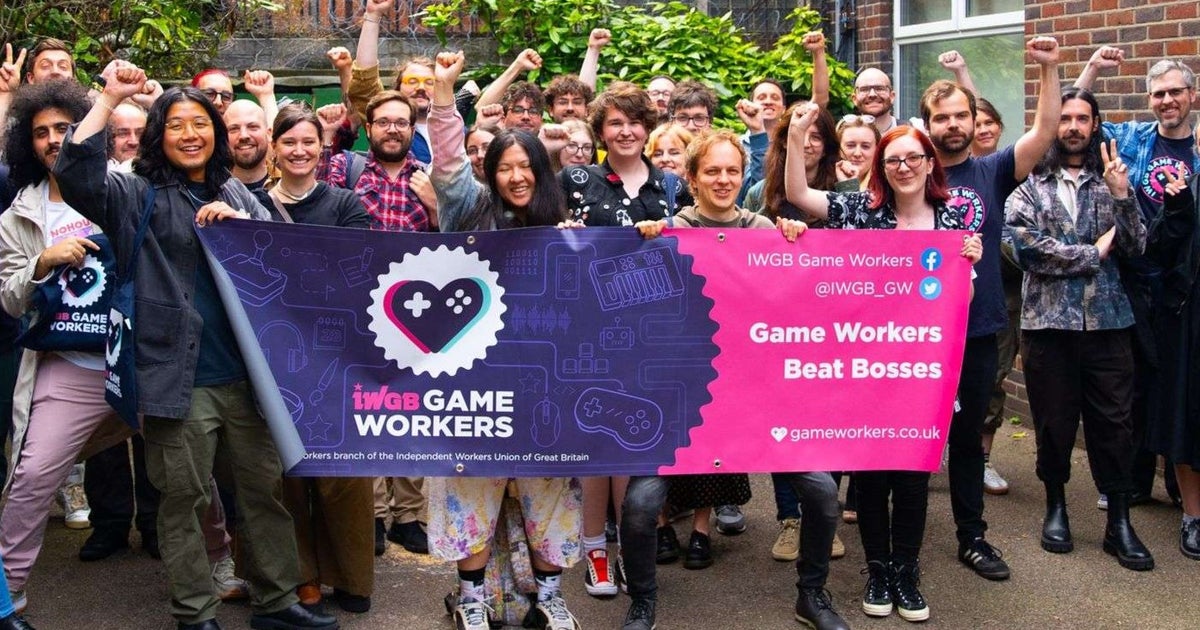
We begin 2026 with not one but two major stories about unionisation in the headlines; an omen, I suspect, of how much of the rest of the year is likely to turn out. Games industry unionisation has gathered steam in recent years after literally decades of being something of a punchline, but progress towards meaningful labour organisation remains slow. This year is likely to be a pivotal one in which those gains are tested against the stubbornly deep-rooted ideological resistance to the concept from many of the industry’s leaders.
It’s notable that neither of the stories we’re following at the moment are focused on the United States – arguably the most union-hostile of the major regions for game development. In the UK, legal and political challenges to Rockstar Games’ firing of 31 workers last October continue to roll onwards, with Rockstar denying claims that the dismissals were retaliation for union organising (it says all of those fired were dismissed for leaking information about upcoming games). In Canada this week, Ubisoft shut down its Ubisoft Halifax studio, affecting 71 staff members; the publisher denies that this is related to the studio’s recent formation of the first ever union within Ubisoft’s North American businesses, saying that it’s just part of ongoing restructuring.
In each case, the affiliated union (IWGB in the UK, CWA in Canada) is pushing further investigation of the motives for the layoffs, with IWGB being particularly direct in accusing Rockstar of union-busting actions. In each case, proving that the publisher did anything illegal (as either action would be if it were motivated by retaliation against labour organisation) is an uphill struggle, but we shouldn’t dismiss investigations and tribunals as pointless. Companies do have a habit of leaving smoking-gun emails and incriminating statements lying around, not to mention that companies with a dim view of labour rights tend to have their fair share of disgruntled potential whistleblowers.
Taking a wider view, however, it may not matter a great deal whether Ubisoft shut its Halifax studio as part of its ongoing restructuring (which is, honestly, eminently likely given the publisher’s highly publicised woes in recent years) or whether the unionisation move played a role in the decision – which is also possible, and by no means mutually exclusive with the restructuring motive.
The message sent is one that will have a chilling effect either way: unionisation didn’t merely fail to protect these staff, it may even have hastened their layoffs. In the Rockstar case, too, unionisation’s protections are coming in the form of a drawn-out legal process after the fact. Even if the staff involved win their tribunal cases, few employees in an industry that’s been so trigger-happy with layoffs in recent years would wish to find themselves in that situation.
“The problem here isn’t with the concept of unions, but rather with the piecemeal, eleventh-hour way in which they’ve been organised in many cases in the games business.”
Neither situation is fully resolved at this point, but regardless of how they turn out – or how severely the companies involved are rapped on the knuckles should evidence of union-busting surface – these cases are very likely to suppress unionisation efforts elsewhere. That’s a side effect for which, a cynic might suggest, many companies would be very willing to pay some expensive legal bills.
I’m not making an argument against unionisation, which I think would be a major benefit not only to the industry’s employees but also to the industry itself, even if it has to be dragged to that particular table kicking and screaming. The problem here isn’t with the concept of unions or even with their legal status in countries like Canada and the UK, but rather with the piecemeal, eleventh-hour way in which unions have been organised in many cases in the games business.

After decades of anti-union propaganda and undermining of organisation efforts at every level, all too many employees don’t even consider participating in unionisation until they start to see writing on the wall regarding layoffs or downsizing in their workplaces. By that point, there’s very little any union could realistically do – at best they can ensure that employees being laid off are treated equitably, but no union can actually stop a troubled company from restructuring an underperforming studio out of existence (nor should we want them to, realistically speaking).
Moreover, even when they do get underway – at the eleventh hour or otherwise – unionisation efforts tend to be very narrow, typically involving only a fraction of staff from a single company. It’s not uncommon to see unions made up only of a subset of staff, frequently those with the least secure job roles and thus the least actual bargaining power. Efforts made to unionise in these situations are laudable but the outcome is desperately weakened from the outset: without more senior staff with actual bargaining power being convinced of the benefit of organising with their colleagues, few employers will pay anything beyond legally required lip service to such unions.
This is a vicious cycle that needs to be broken if industry staff at all levels of seniority are to feel genuine benefits from unionisation. The good news in recent years has been that there’s growing awareness of the importance of labour organisation across the industry.
The heinously awful handling of harassment and abuse at many companies forced a lot of people to belatedly recognise that HR departments’ roles in these situations is to protect companies from their staff, not vice versa, and having an actual organised voice for employees can be incredibly important. Heavy-handed back-to-office directives after COVID – often in the face of clear data showing productivity gains from remote and hybrid working styles – shifted attitudes further in favour of organisation. And as massive layoffs swept the industry over the past few years, nobody could fail to notice that countries with stronger labour protections were comparatively untouched, with job stability being far better overall in those places.
This latter point is an important one, because it highlights a key value of labour organisation and protection: it turns staff into stakeholders in their companies and in doing so, creates a counterbalance to some of the financial hot air that has recently made the games industry so incredibly unstable. No union can prevent layoffs and restructuring when the industry’s macro climate is terrible, but their existence can put a brake on the over-inflation of speculative bubbles and ensure that those bubbles deflate relatively gently rather than popping catastrophically. Having a strong onus on companies to create only jobs they know are stable and secure can slow growth, but much of that growth can be unsustainable speculation, and there are immense upsides to improved stability and sustainability for employees, companies, and the quality of the games themselves.
Union formation is an uphill slog, but a worthwhile one. Well-organised unions are invaluable at ensuring that staff are treated equitably and fairly, at securing benefits and improved working conditions, and at giving employees a voice in their company’s decision-making which often turns out to be a significant positive for the company overall. There is a major risk, however, that if many of these newly formed unions are so small and weak that they immediately lose their first high-profile skirmishes, the clock is going to be set back on broader union adoption every single time. A key step in avoiding that scenario must be convincing employees of those benefits when times are good and bargaining power is real – not just when the clock reads two minutes to midnight and the repo men are already at the door.
