



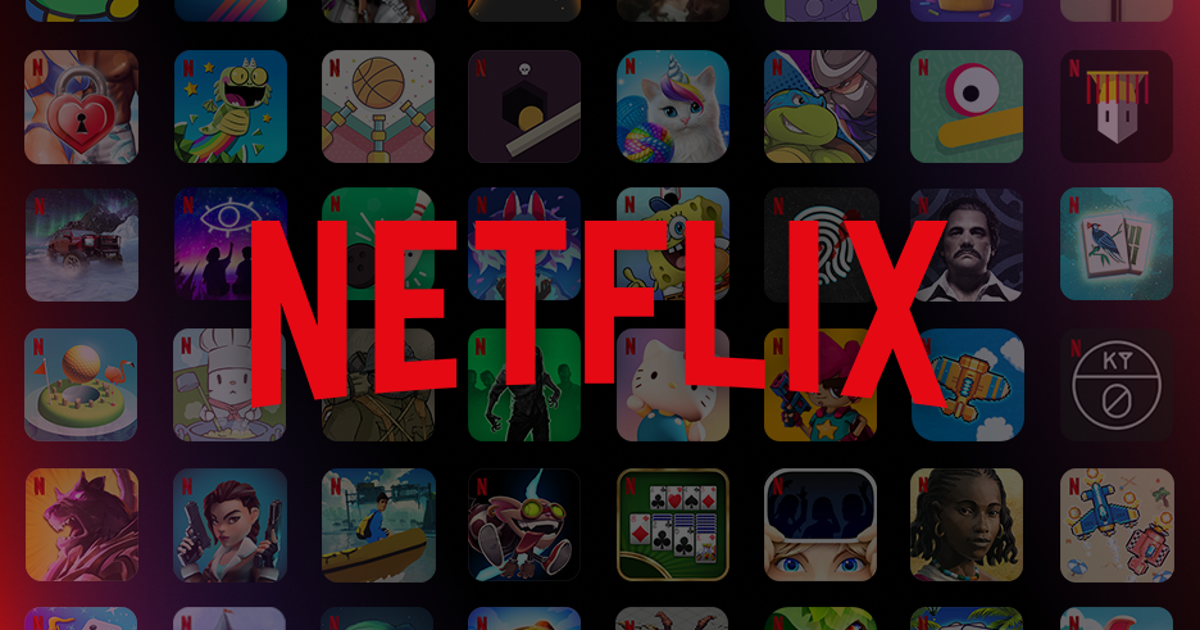
Netflix’s proposed acquisition of Warner Bros. has pulled attention toward studios, IP ownership, and the future of the entertainment industry at large. It’s a big deal, and we know it’s not driven by appetite for the Warner Bros. gaming arm which is considered “relatively minor” in the grand scheme of things. What has received far less attention is how Netflix’s own games strategy is evolving, and what the data now tells us about what is actually working inside the platform.
One thing that Netflix is incredibly obsessed with right now is engagement. As of the start of 2025, the streamer ceased regular disclosure of subscriber metrics, shifting to spotlight engagement instead. It’s fair to assume this was down to global subscription saturation, but that first mover scale gives the streamer a natural edge when usage becomes the measure of success. Gaming is a lever in that strategy, and our analysis of the Netflix catalogue, just published as the Netflix Kids Gaming Report, suggests its certain types of games that see sustained visibility.
The streamer’s games journey has moved quickly, starting with early interactive storytelling formats like Black Mirror: Bandersnatch before pivoting to mobile games where it now has more than 100 titles. Recent announcements from the streamer have organised the strategy around four core pillars: Mainstream Games, Narrative Games, Party Games and Kids Games. The existence of these pillars matters less than the individual titles within them, which is where the data becomes more revealing.
The question is “what actually works?” The trending ranking data we analysed for our research shows that good old-fashioned mobile games like Solitaire and Snake have ongoing footing. GTA: San Andreas and Football Manager Mobile also hold firm as evergreens. IP-based games feature, but are less consistent, peaking lower and falling more quickly. We track this in detail in the report.
There is clear momentum in kids games on Netflix. From a UX point of view, games are now available directly in kids profiles as of last weekend. “A lot of our early work was about building the right foundations, especially around parental gating and safety. Now we’re able to offer a more seamless experience for our youngest members,” says Lisa Burgess, GM of Netflix Games (Kids).
The recent update to the Kids UX also saw instant impact. A number of Netflix’s kids games hit top rankings in US app stores over the weekend, in line with the update. With discoverability addressed, and the parental value proposition clear, it’s fair to assume that preschool gaming may take up more space in the gaming ranking going forward.
Parental consent remains central to this user journey. While kids profiles now surface games, accessing them still requires a download via the app store, an environment that demands careful handling for younger users. The challenge is balancing visibility and access with safety. For Netflix, surfacing games in kids profiles resolves the discovery gap, but maintaining parental involvement in the download flow is really important.
In addition to that, new titles are coming on board, many tied to beloved and well-known IP such as PAW Patrol and SpongeBob SquarePants. “We wanted to focus on things that are highly recognisable for kids and that fall into multiple categories. It can be big IP on our service, or well-known toy or literary IP,” said Burgess. This mirrors the approach Netflix takes with kids TV acquisition, where the streamer regularly pursues established brands like Peppa Pig, as well as creator-led properties from YouTube such as Ms. Rachel and CoComelon.
Alongside games designed specifically for kids, there are also many kid-appropriate titles such as Snake and Cut the Rope. Kid-appropriate games make up for nearly a quarter of the overall offering according to our research. At the same time, a significant portion of the catalogue remains unsuitable for children including games tied to Money Heist or Sex Education, or a version of GTA: San Andreas.

There’s plenty for parents to like about the Netflix gaming experience: the interface offers curated titles that are free of ads and in-app purchases. The clearest opportunity remains preschool. This is the audience where parental trust, recognisable IP, and low-friction mechanics align most cleanly. It is no coincidence that Netflix has invested heavily in foundations here before pushing further up the age curve.
Things get harder when pursuing older audiences. From 6+ the media diet of kids diversifies significantly both in terms of IPs and platforms. Roblox becomes nearly ubiquitous, but Netflix has ambitions to capture some of this too. “As we go into 2026, we’re thinking more about how do we develop great experiences for six to eight… it’s a harder audience, the ecosystem is more competitive but not impossible” says Burgess.
There seems to be renewed focus in Netflix games though the objective is centred around the unique space the streamer can own, rather than building a targeted revenue-driven gaming vertical. The push into family party games, which extend from the TV interface via smart phones, reveals a broader but aligned objective to own more shared living room experiences.
On kids the foundations have been laid and the value is clearest in preschool. How far Netflix can push into older kids will be a more complex test, but without the pressure of direct monetisation, the streamer may be well positioned to unlock more distinctive forms of innovation. For developers, this signals that success on Netflix with older kids will hinge on formats that compete on engagement rather than monetisation.
To download a copy of the Netflix Kids Gaming report click here.
