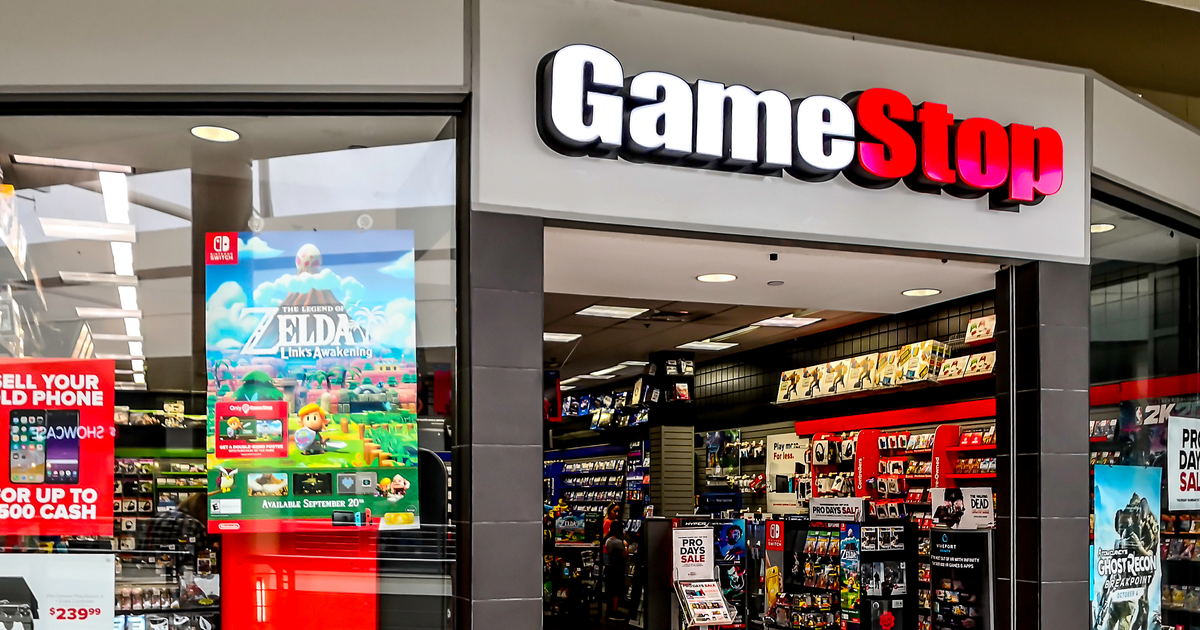
Retailer GameStop has reportedly closed hundreds of its stores in the United States.
That’s according to posts on social media – as spotted by Polygon – which show that shops across the country are shutting down. At the time of writing, the GS Closing blog has a tally of 390 stores that are now closed, with another 10 reported but unconfirmed.
There are also reports, via RNZ, that the company is planning to close its EB Games subsidiary in New Zealand. EB Games managing director Shane Stockwell has reportedly sent an email to staff letting them know that the proposal is “not final” and that no decision was going to be made “until we have completed a full consultation process in good faith with affected team members.”
Per GameStop’s 10-K annual report filing for the financial year ending February 2025, the company has 38 stores in New Zealand.
In that filing, the retailer told investors that it had shut down 590 of its stores in the United States in the 2024 financial year; the company also says it anticipates “closing a significant number of additional stores in fiscal 2025”.
The cuts aren’t just affecting the United States and New Zealand.
In recent years, GameStop has closed down its operations in Ireland, Switzerland, Austria and Germany. The company has also sold off its Italian subsidiary and is currently looking for a buyer for its French and Canadian businesses.
While aggressive cuts are being made to its business, GameStop has announced a new long-term performance award for CEO, Ryan Cohen worth $35 million.
In order to reach this, the chief executive has to increase GameStop’s market cap to $100 billion. At the time of writing, the company is worth $9.52 billion. Even at the height of the r/wallstreetbets-fueled short squeeze in January 2021, when shares reached $483.00 ($81.25 in today’s price following two stock splits), GameStop’s market cap was $33.7 billion.
Between the company’s 2023 and 2024 financial years, net sales dropped by 27.5% to $3.8 billion. There was a 29.9% decline in sales of hardware and accessories, while software dipped 33.9%. Sales of collectables, meanwhile, dropped by 4.8%.