



Back in 2016, Ubisoft released its new Tom Clancy shooter, The Division. It was part of a new wave of titles, like Destiny, that combined the online persistence of an MMO with more conventional gameplay: in this case, the tactical cover shooter.
The original Division shifted over ten million copies before a sequel, The Division 2, launched in 2019. To date, the franchise has attracted over 40 million players.
The series has clearly been a success, but at least initially, it came with a considerable learning curve for Ubisoft. When we spoke to François-Xavier Deniele, VP of marketing and esports for Rainbow Six Siege, he likened running a live-service game to changing the engine of a car while it’s still driving. The Division team agrees with this analogy, but says that it is more like a bus.
“You need to have people on board with you,” says Fredrik Brönjemark, senior producer for The Division at Ubisoft Massive. “Everyone on the bus has an opinion on which direction we should take.” He adds that the thing that makes or breaks a live game is how a company treats its core audience; these are the people who are going to go out and advocate and spread positive word of mouth.
“The biggest lesson is to not take our players for granted,” he says. “That’s something we learn the hard way at some points. If a player is a long-term fan, we should fight to keep them. We should never just assume they’ll stick with us because they are a fan.”
Another challenge of helming a long-running game like The Division is ensuring you invest appropriately in the tech side of things, as eventually this will catch up with you and stop you from being able to add to the game in the way you want.
“You need to pay attention to the level of time and resources you put into refactoring old code and working on reducing the tech debt,” The Division 2’s creative director, Yannick Banchereau, explains. “At some point, it’s going to slow things down a lot or it’s going to tie your hands on what you are able to do. That’s something that we have learnt and work on in a really organised way today, much more so than in the past.”

When moving across to The Division 2, Ubisoft wanted to address some of the shortcomings of the original game. In particular, the first title came under fire for not having enough endgame content, meaning that once someone had finished the campaign, there was very little to do.
“We started with the endgame,” Banchereau says. “We thought about that first; how was that going to play and what did that mean in turn for the campaign experience? That was the fundamental shift in mindset. There were a lot of different factors, but ultimately, it played a super big part in how we have managed to maintain The Division 2 for such a long time compared to The Division.” The Division 2 launched in 2019, with post-launch support intended to finish in late 2020 after the Warlords of New York expansion. Developer Massive Entertainment was set to move its focus to other projects like Star Wars Outlaws and Avatar: Frontiers of Pandora. But the success of that DLC meant that Ubisoft wanted to keep The Division 2 going.
“Rebuilding the team and producing new content took some time,” Brönjemark admits. “But since then, we have been building at pace. It was very discreet at first and very much targeted at our own players, making sure that we solidified the baseline of players to keep our fans engaged, and then try to start building new systems, building new foundations.”
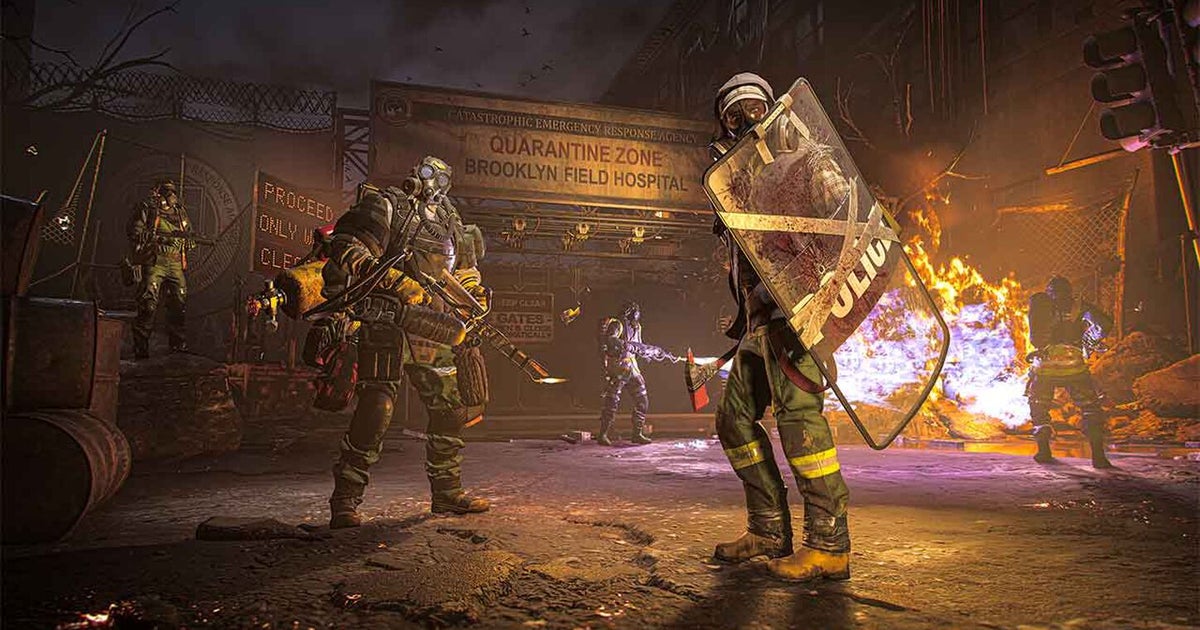
More recently, Massive released a second expansion for The Division 2 called the Battle for Brooklyn in 2025. This has helped the game reach new levels of success; just recently the title hit a new record on Steam of 27,482 concurrent players.

“Battle for Brooklyn was the moment where people started noticing that The Division 2 was still here and was very strong,” Brönjemark says. “We had a great year of content after that and a lot of positivity from our players. Now, on the anniversary, we hit just at the right time with the right kind of content and the right message for people who are looking for great value for money for an experience that they can sink into and get a lot of hours of gameplay from.
“There’s a part of our playerbase that is looking for this six-year-old experience, where you know you are going to buy into something that is going to last, that has a history and is going to keep going for a very long time. That’s what is giving us a lot of our positive interest beyond just our usual fanbase. There aren’t many games that have lasted as long as we have and aren’t just still going, but are growing, too. This is where we are at; we’re not just keeping the game alive after eight years, we are actually doing more. This is the biggest year we have ever planned in terms of content for The Division 2. We aren’t just still going, we are growing. We are growing in ambition and we are delivering more and more things. There aren’t many games in the position we are in now.”
Not free to play
It’s common for companies managing long-running games to adjust or change the business model after a while, often as a means of attracting new players. You can see that Ubisoft is open to this kind of shift; Rainbow Six Siege went free-to-play in 2025, almost ten years into its existence, although the game’s competitive modes are still behind a paywall.
The Massive team says they have looked into going free-to-play, but it “never made sense.”
“It’s very clear that the model we currently have works really well with the current game,” Banchereau says.

Part of the reason why The Division 2 hasn’t become free-to-play is that this would mean fundamental changes for the way the game is designed. “We are trying to be a bit protective of the experience of our players and the way we monetise, the way we do business,” Brönjemark says.
“We are realistic about how this works and at the end of the day, for our game to continue growing we need to generate revenue. But we always want to make sure that we do that in a respectful way for our players. Free-to-play wouldn’t necessarily violate that, but you would need to adapt and make some changes. So far, we haven’t really seen the need to do that.”
In 2021, Ubisoft announced a new free-to-play standalone The Division title called Heartland. The project was being helmed by Red Storm, but was ultimately cancelled after a number of public tests and a few delays.
The Massive team isn’t able to comment much on the game’s cancellation, simply pointing to it being part of an Ubisoft restructuring effort. (As part of Ubisoft’s €200 million global savings plan, the publisher announced game development would cease at Red Storm in March, with the loss of 105 jobs. The firm also made layoffs at Massive and Ubisoft Stockholm in January.) But they do say that there was collaboration between them and the team working on Heartland and that there was some influence on The Division 2.
“There were some lessons and collaboration between us when Heartland was in development,” Brönjemark says. “All of that contributed to the growth of The Division 2. The game didn’t make it, but there were still opportunities to learn in Division 2.”

Another direction that The Division is heading in is mobile. Ubisoft recently released The Division Resurgence, a long-in-development take on the shooter MMO that, according to Brönjemark, has drawn a great deal of excitement from gamers who aren’t necessarily mobile fans at heart.
“That speaks to the strength and the passion of The Division fanbase. That hunger for more Division experiences. We see that a lot. People are always asking for news about it. It’s a testament to the strength of our fan base, but they are really willing to potentially go outside of their usual comfort zone to get more Division.”
The Division 3
But perhaps the biggest push forward in the series is The Division 3, which was announced in 2023 but currently doesn’t have a release date. The team can’t say much about the project, except to say that having two development tracks – one for The Division 2 live game and another for The Division 3 – means that lessons can be learnt across projects.
The ability to exchange information between the two teams about “what works and what doesn’t” in a live game puts the team on The Division 3 in a “really great position,” explains Banchereau. Brönjemark adds that all of the knowledge and expertise that’s been built up over the years on The Division 2 will eventually benefit The Division 3.

One cloud hanging over The Division 3 is the departure of Julian Gerighty, who left Massive for DICE at the start of 2026. Almost the entirety of his 12-year stint at the studio was spent on The Division, first as creative director on The Division and The Division 2, then later as executive producer overseeing the whole franchise. While the Massive team says they will miss him, they insist his departure isn’t going to impact work on the next entry in the franchise.
“We are operating and executing on the road map that had been planned and secured for some time already,” Brönjemark says. “Julian’s departure isn’t a distraction. We’re happy for him and obviously sad to see him go. He was a friend. But as far as The Division 3 goes, we have our future and our roadmap that is already secure, and we know exactly where we are going and exactly what we want to do.”
Ten years into The Division’s journey, Banchereau says that he has “zero doubt” that the franchise will still be going in another decade. As for how Ubisoft is going to get there, it’s about keeping the audience sweet.
“It is all about having happy players and a thriving community,” he explains. “That is the main goal. If we have that, then eventually we will be able to grow the playerbase and have a strong and thriving community when The Division 3 releases and continues the growth from there. That’s really what we see in front of us.”
He concludes: “Now we have Resurgence, which will be a big part of that, we are inviting a new audience as well to the franchise.”
