




This article is part of AI Week.
Songyee Yoon spent 15 years at the Korean video game developer NCSoft, the maker of MMORPGs such as Lineage and Guild Wars, where she rose to become president and CSO. But long before she joined the company, Yoon received a doctorate in computational neuroscience from the Massachusetts Institute of Technology, and since leaving NCSoft in 2023, she has founded the venture capital firm Principal Venture Partners (PVP) to invest in AI-native start-ups.
Here, Yoon tells GamesIndustry.biz about her philosophy on how AI should be used, how AI became essential to game development at NCSoft, and why she thinks only a few winners will emerge from the AI bubble.
How did you become involved with AI at NCSoft?
I was told I was crazy to say that there’s so many opportunities in the gaming business for AI to be used. But my background was in AI and data science, so it was very natural for me to see that potential.
The lowest hanging fruit back then was it could predict player churn, because you have all the play logs of an individual player, their login data, and how they interacted with other players, and you can predict whether this player is about to churn out. Then there could be some intervention and offering that can increase retention, which is very valuable for the business.
That was something that I proposed, and everyone was like, ‘You’re crazy, you don’t understand the gaming industry’. Anyway, fast forward, and the gaming business is embracing AI technology – you cannot think of game development without thinking about AI today.
Can you give any examples of how AI has been used at NCSoft?
I think it’s easier to say where it’s not used. Within NCSoft, we encouraged even the daycare nursery teachers to learn Python. We gave them a platform of how kids are interacting with new content and learning, and they can run queries. We also gave training to HR professionals within NCSoft. We had our first HR bot, which can answer all the questions, well before ChatGPT.
Marketing trend prediction, monetization, packaging of virtual goods, NPC dialogue, adaptive NPC interactions, animation support, interactive music, interactive lighting, all of those things, you cannot think of doing it without the use of AI.
Why did you decide to leave NCSoft and start PVP?
I thought it was an exciting time to start the business. I’ve been doing AI for 30 years, but technology is now at the stage where we have enough advancement, data availability, and human talent to build businesses in an AI-native way.
What I mean by AI native is that if you think about the last 20 years, the bestselling product of consulting firms has been digital transformation. But if you look at the top 10 NASDAQ companies, they’re not transformed companies, they’re digital-native companies that started after the introduction of broadband and digital technology. Similarly, I think it’s time to build AI-native companies that are fully embracing the AI tech stack that was not available 20 years ago to be competitive, and to create this enormous value.
There’s a perception that we’re in the midst of an AI bubble, is that something that worries you?
Yes, because this platform shift is a big shift, and we have learned that there’s a lot of opportunity that comes with it, and people want to participate in this transition. There’s a large demand to invest in AI companies and the next winners. But if you think about the number of great companies that can be generational winners, the number is limited, and so there’s a mismatch between demand and supply, and when there is a demand and supply mismatch, I think there is a bubble.
There’s a lot of marketing hype instead of focusing on building enduring value. So I think it’s creating a bubble and a lot of noise in the marketplace.
If there is an oversupply, which areas will succeed in the future? Where is AI going to be used?
At PVP, we try to invest in a thesis that’s timeless. Timeless in the meaning of companies that can survive the hype and noise. So there are some areas that we focus on.
One is building the infrastructure. So we invested in companies like Hyperbolic and Lambda that are going to provide essential tools while AI builders are building their applications. Another area is that there are industries and verticals that have a lot of unstructured data, so the compounding data advantage creates the moat for the companies to be competitive over time. These are areas like insurance, accounting, legal, health care: there’s a lot of unstructured data where human eyes cannot bring out that insight, but when you’re augmented with AI tools, you can see a lot of the insight that you couldn’t see before.
One thing that AI gets criticized for is that it can be a solution in search of a problem, with companies sometimes rushing to introduce an AI product that its customers end up ignoring because it’s of little practical use. So in your view, what are the kind of problems AI should be used to solve?
I think that’s a real business problem. I mean, there are a lot of games that are made but shut down because there are not enough users. Just because you launch a game or launch a product, you cannot assume that people are going to use it. There should be good utility and good value, and a reason why they should be using it. Whether it’s AI or not, that’s business 101.
The first business application that I worked on was I built a credit-scoring model for a bank. Back then, there were no good user metrics – they didn’t have the cloud, and the data was on a tape. I had to put the tape in my car trunk, bring it to my office, upload the data, and build a model. And it was a much better model than the ones they were using before.
That was a very simple machine learning technique, but if you have a data-understanding talent and technology, there’s so many applications that you can build using AI.
That credit-scoring model is a really good example of how AI can be used to analyse data and make predictions, which is where it can excel. But what about the use of AI to create images and voices, which people worry are taking away the art from things like video games? What’s your viewpoint on that, and will this kind of AI use become the norm, or will it be rejected?
There are many aspects to that. I think the internet will be flooded with data and content that is generated by AI much more than human-generated content pretty soon. But does that mean that people will appreciate all that AI generated content? I think the art here is curation of the content, selection of the content, or orchestrating AI-generated tools to produce something that matters, that resonates with our audience and users. And I think there is a human artistry that needs to go into it.
That’s one thing. Another is more focused on respecting human creativity and human value, or IP rights. And I think that’s being dismissed by different objectives of the industry and many people who have influence in how things evolve. But I think that should not be overlooked, and as a society, we should put more considered effort into protecting artists.
When you say that, do you mean more legal protection?
Yes. And I think human creativity cannot be completely replaced by technology. How are AIs going to be trained if that data is not continued to be created? So I think there [should be] respect for the input, respect for their work, and I don’t think there is enough investment in conversations that go into how we can do it.
Gaming is at the forefront of AI technology, and in that sense, do you feel that what’s happening now in the games industry is a premonition of what’s going to happen elsewhere in the future?
I think that has been the case many times, right? Gaming is always at the forefront of innovation. Whether it’s the business model acceptance of virtual goods or community ranking and gamification, a lot of things started in gaming.
I think gaming has been the laboratory for new innovations and how to bring them to a larger audience. And I expect to see that trend continue in AI.
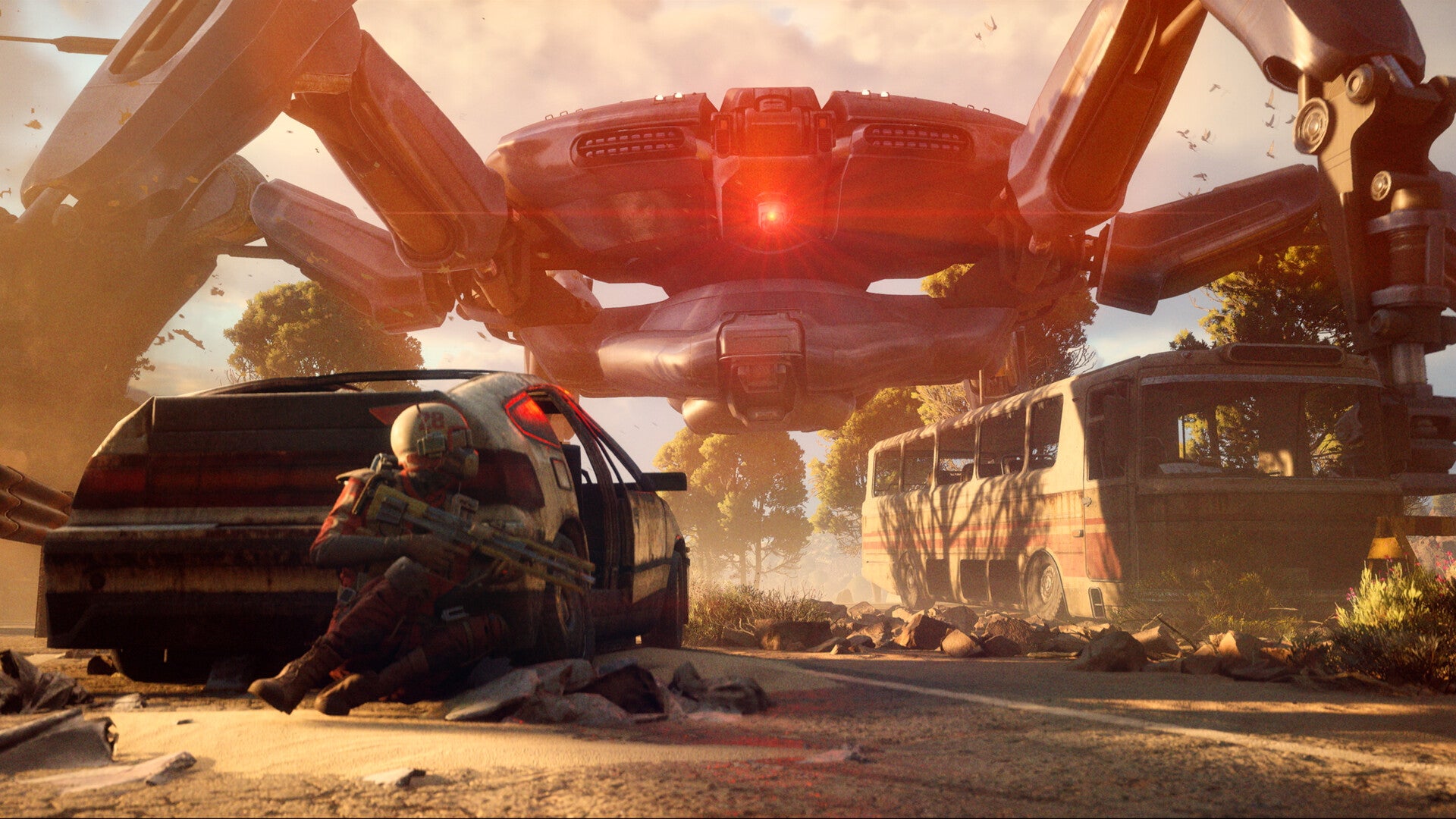
Recently, there was some strong pushback against the use of AI-generated voices in Arc Raiders, but the audience seemed broadly more accepting of the use of machine learning for enemy behaviour in the game. I wonder whether that’s a narrative that’s going to play out across the world now, with a separation in attitudes towards the data or development side versus the more creative side?
I think that’s a very good question, but I think even on the creativity side, there’s a lot of grey area. I mean, real artists, should they only use paper and pen, not even Adobe?
It’s a tool, right? It is a tool that maximizes your human creativity, that’s how I see it, but it’s not something that you should hide. It’s a tool that allows you to be more productive, and allows you to express things that you thought about but couldn’t do, because the coordination or the dexterity was not quite there.
So I think it is a tool, but I think as long as we respect the IP and be transparent that we used this tool to create this, it’s up to the players, up to the user to choose what they feel most comfortable with.
Finally, there’s a big debate over the ethics of AI. What’s your viewpoint on the use of training data in particular?
I think transparency is going to be very important. Some people say transparency, and any regulation, is at the opposite end of innovation. But think about the food industry: the food industry has always had labels about what’s in there, the ingredients, and it doesn’t hinder them from being more innovative and coming out with new products. But it protects consumers who have allergies, and it protects consumers who care about certain ingredients. So I think for consumer protection, it’s helpful to know how the sausage was made.
AI is not perfect. It’s a tool that comes with limitations, and some kind of bias, inevitably, regardless of what you do. And I think it’s better for us to know how it was made and what the limitations are in a way that doesn’t interfere with the competition with others, but still protects the consumers. And I think there are ways to do it that will provide a more sustainable future for all of us.
This interview has been edited for length and clarity.
