


Research by Sensor Tower – done at the request of GamesIndustry.biz – shows that indies and original IP made up a much higher proportion of the biggest PC and console games of 2026 when compared with 2025.
The analytics firm picked out the games that had sold more than 500,000 units in their first month on sale in two 12-month date ranges: September 2024 to August 2025 (the 2025 cohort), and September 2025 to August 2026 (the 2026 cohort). In the 2025 cohort, a total of 55 games sold more than 500,000 units in their first month, while 76 games met the threshold in the 2026 cohort, and the number of units sold increased by 51% year on year, from 120.5 million to 182.4 million.
In the 2025 cohort, just 13 titles (24%) were indies, compared with 33 in the 2026 cohort (43%).
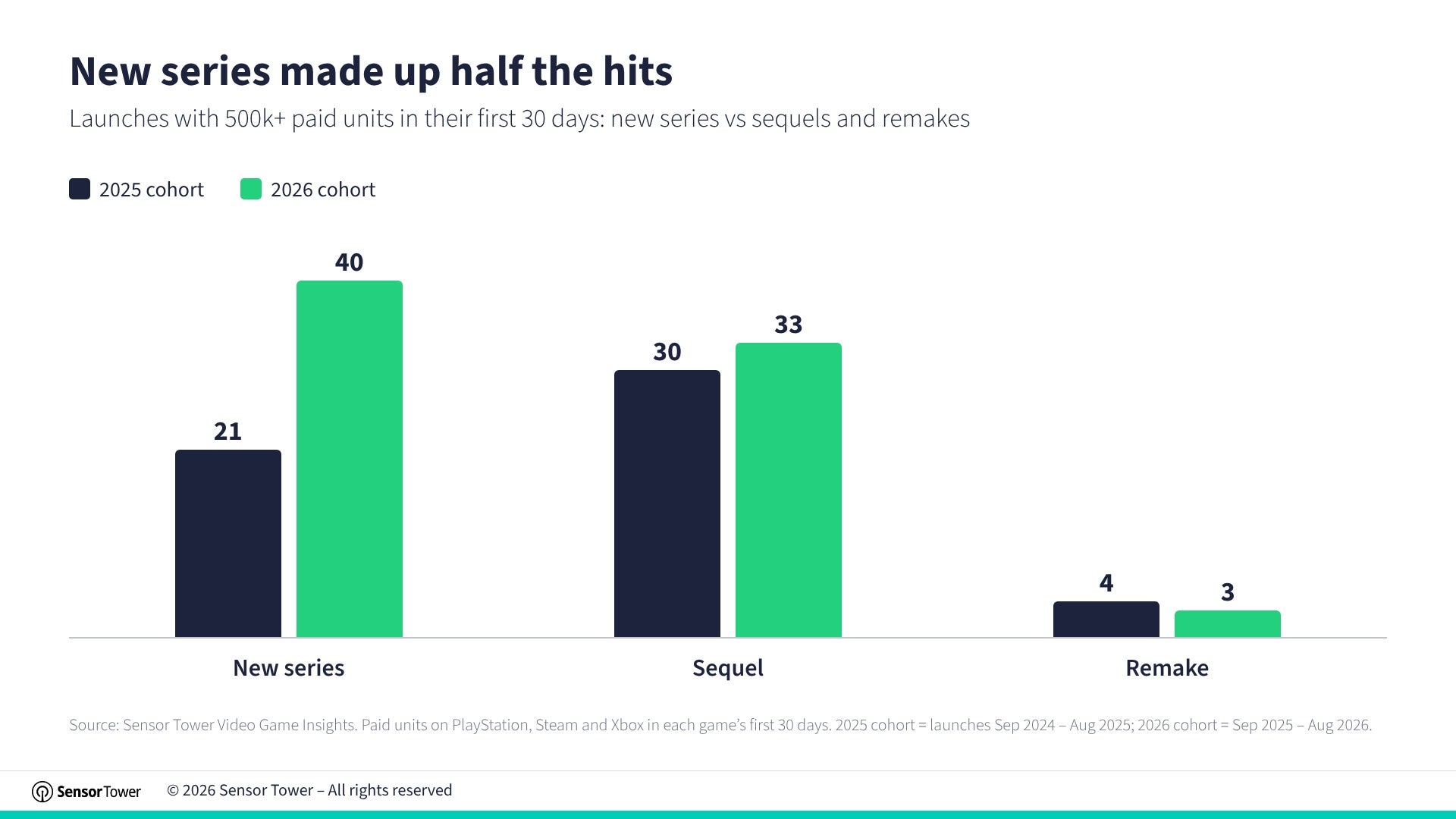
New series also broke through. Forty titles (53%) in 2026 were the first game in a new series, up from 21 titles (38%) in 2025. However, it’s notable that sequels still tend to sell more per game – sequels accounted for 55% of month-one paid units in 2026.
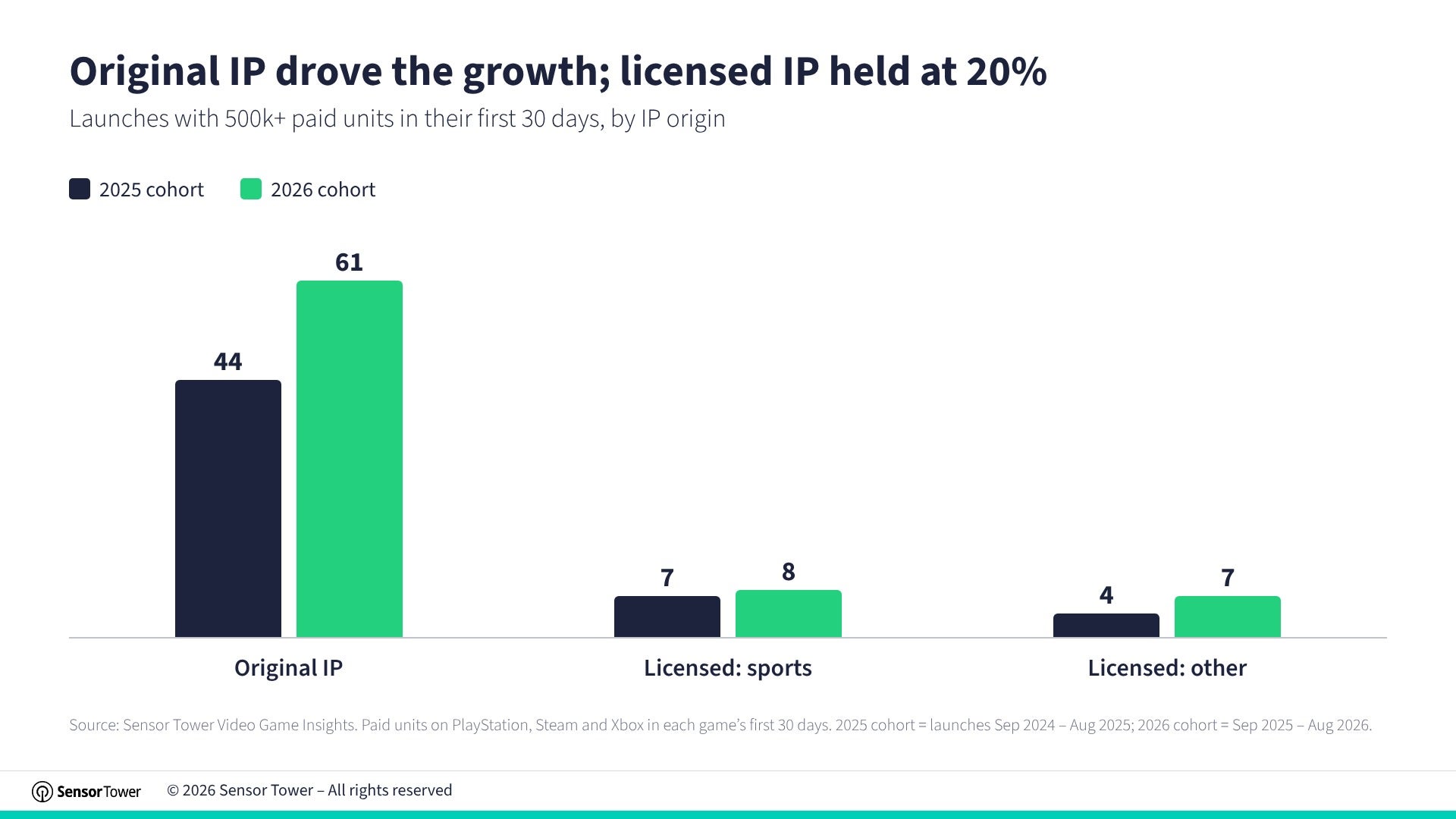
In addition, the number of games based on original IP (IP owned by the developer or publisher as opposed to IP licensed from sports leagues, film, TV, comics, or toys) leapt up from 44 titles in 2025 to 61 in 2026. The number of games based on completely new IP (that is, not based on an existing franchise) increased from 19 in 2025 to 35 in 2026, with 27 of them being made by indie studios.
The number of AA and AAA titles achieving one-month sales of more than 500,000 units remained flat across 2025 and 2026. Fifteen AA games sold more than 500,000 units their first month in both 2025 and 2026, while the numbers rose very slightly for AAA, from 27 to 28.
However, when looking at unit sales, the share of month-one paid units for AA games shrank from 21% in 2025 to 14% in 2026, while the share for indies increased from 26% to 38%.

Some of the biggest indie hits in the 2026 cohort were Meccha Chameleon (13.9 million units sold in the first month according to Sensor Tower estimates), How to Fish (7.9 million), Slay the Spire 2 (5.9 million), Hollow Knight: Silksong (5.2 million), and Escape from Duckov (4 million).
The full report can be downloaded from Sensor Tower here.
GamesIndustry.biz asked Karl Kontus, SVP and GM of Video Game Insights at Sensor Tower, for his interpretation of the results, and his answers are below.
Were you surprised at the results of the data?
I expected a strong year for indie, and my gut said most of it would come from “friendslop” – the low budget co-op party games like Meccha Chameleon and How to Fish. They did produce the biggest indie breakouts, roughly half of indie first-month sales. But they were only 9 of the 33 indie hits. Indie studios also broke through with single-player games and long-awaited sequels like Slay the Spire 2 and Hollow Knight: Silksong. The indie success is much broader than one genre.
Are we seeing a move away from AAA?
Not really. AAA is holding steady: the same amount of AAA games passed 500k paid units in their first month as the year before. AAA still accounts for nearly half of first-month sales, and big franchises like Battlefield, EA Sports FC, and Resident Evil keep delivering. Indie hits aren’t taking away the share from AAA, they are additive. They drive the new growth. What surprised me is how many games now clear 500,000 sales in their first 30 days: 76, up from 55 a year earlier. That’s a very healthy sign for the industry.
What kind of trends are you seeing among the biggest selling titles?
Three stories are playing out here. First, established studios, whether AAA, AA, or indie, are leaning into their franchises, and it’s working: sequels like Battlefield 6, Resident Evil Requiem, Slay the Spire 2, and Silksong are among the biggest launches. Second, AA studios are making big bets that are paying off. Crimson Desert, 007 First Light, and Wardogs are each competing head-on with AAA, and some could become the next big franchises. Third, indie is focused on maximum fun in a contained scope: low budgets, fresh ideas and the hope of going viral. Meccha Chameleon sold more copies in its first month than any other launch in the last year, except Battlefield 6.
Is there any link between being an original IP and the number of units sold? Do original games sell more or less?
Original games give you a higher ceiling, but a lower floor. In our 2026 cohort, 35 of the 76 games that sold 500k+ in their first month were brand-new games on original IP, up from 19 a year earlier. Four of the ten biggest launches were brand-new, including Meccha Chameleon and Arc Raiders. Existing IP still gives a more reliable start and takes risk out of a project, so the choice is less about maximising potential and more about managing risk. AAA has taken most of that risk off the table in this part of the cycle: only 5 of its 28 hits were brand-new games. So innovation is coming from indie and AA. I expect AAA to start making riskier bets again as publishers watch these indie breakouts and investors look for growth. Arc Raiders shows what that can look like.