



Just before Summer Games Fest kicked off, Paramount Skydance announced it was merging its video games divisions into a new entity called Paramount Games Studio.
The venture brings Skydance’s studios – Skydance Interactive and Skydance New Media – under the same umbrella as Paramount’s IP. The 170-strong outfit is helmed by EVP and head of games, Dan Prigg, who previously worked at Scopely and Aspyr Media before joining Skydance Interactive in 2022 as EVP and head of studio. He tells GamesIndustry.biz that the new organisation is the most sensible way to serve the company’s purposes.
“Paramount, prior to the merger, was just licensing,” he explains. “They weren’t doing any internal development. They weren’t really doing much in terms of co-development and publishing. Skydance had a couple of studios, and we had licensing on our own.” The newly united business “looked at the whole thing holistically” and concluded the sensible option was “one division that can help control the slate, help with the brands, really build the communities.”
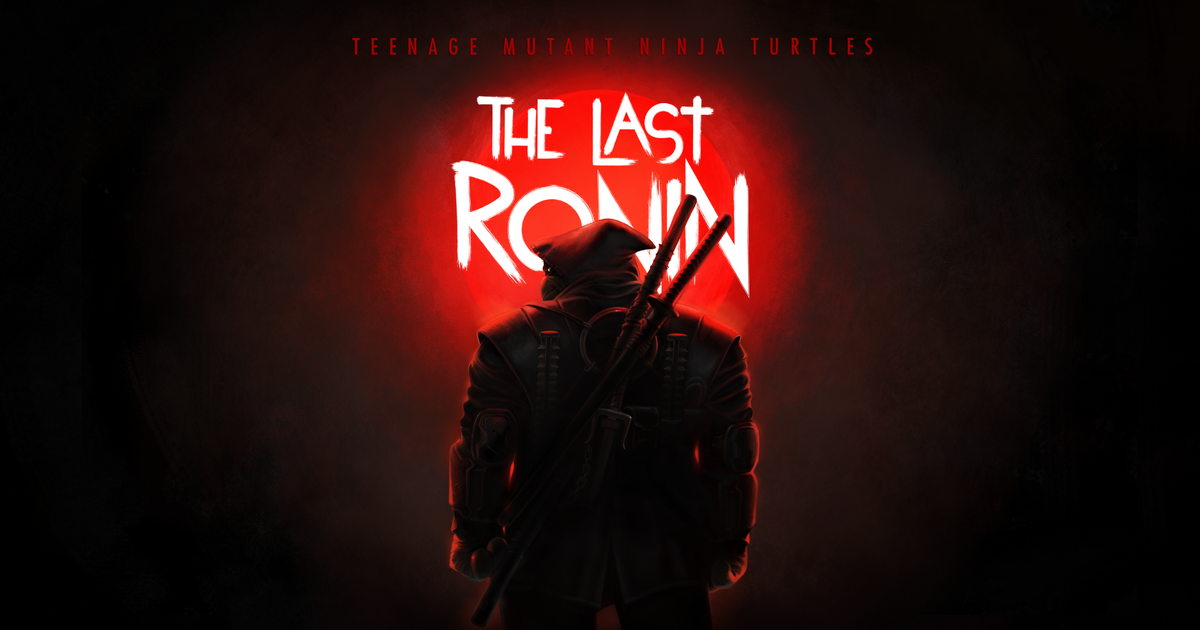
The new division was born with several titles already in development, including the Marvel 1943 title that Amy Hennig has been working on for some time, an unspecified Star Wars title from the same studio, and the externally-developed Avatar Legends: The Fighting Game. At SGF the firm announced a Teenage Mutant Ninja Turtles game from hack-and-slash specialists PlatinumGames and Star Trek: Shadow Frontier, a horror romp from genre specialists BlooberTeam. It’s looking to sign more, chiefly through co-development because “we have more IP than we have actual capacity,” says Prigg.
Finding co-development partners
In terms of picking developers to work on projects, Prigg says Paramount has a pretty simple philosophy: “right IP, right team, right size,” with the latter referring to both the scope of the game and the size of the team that makes it. “We don’t necessarily want to do some sort of massive AAA IP that may not make sense for the IP,” he says. “With Platinum, we got a great triple-A studio that is passionate about our IP and that’s what we want to find, from a studio perspective.”
Other brands may get smaller games, if the the right partner can be found. “It’s going to be a combination,” says Prigg. “A double-A title is going to feel just as good as a triple-A title if you do it right. I don’t want to break myself into jail by saying it always has to be AAA, because then the smaller studios who might do something amazing for us aren’t going to try.”
“I don’t want to say it always has to be AAA, because then the smaller studios who might do something amazing for us aren’t going to try”
“I think we’re always going to be looking at pitches, and I don’t want to be saying ‘we’ll only use these kinds of studios.’ I want the best studios to rise up,” he says, admitting that he knows this is opening him up to a deluge of inbound pitches. “It’s about finding the best partner that makes sense, who could really bring out the IP for us– whether they are internal, co-development or licensing.”
It’s not looking purely at PC and console, either. The company already has a presence in Roblox with titles such as SpongeBob Squarepants and TMNT: Battle Tycoon, and outreach that Prigg says will continue. “We want to be where the fans are,” he says, “and Gen Alpha, this is where they’re participating.” It’s also “actively looking at” mobile, with a view to building on successful partnerships with Scopley and FunPlus.
“We’re trying to make games for all generations,” says Prigg. “That’s the hard part – it’s not just four quadrants, it’s 4D quadrants. We have so much IP across so many different generations that it’s hard to keep track of it all and see what makes sense, but that’s the fun part.
“There’s kids who may have never heard of Teenage Mutant Ninja Turtles… or there might be that Gen X that hadn’t thought of Turtles in 20 years. For us, it’s really about the exposure: if we continue to build a brand, maybe then they want to see the TV show or the movie or an animation. That’s where we want to make sure that we’re doing our part from a games perspective, to do the best representation.”
A huge IP archive
There is no shortage of IP to choose from, with decades of film and TV brands waiting to be exploited. “Mission Impossible is still high on my list,” says Prigg. “Star Trek is a big perennial. That’s a big one for us and it’s very loved. Franchises like SpongeBob and Avatar are big ones. The Nick games themselves are huge. We want to bring those back to a certain degree, asking how we could continue to build those brands.”
The team is not rushing into any given IP, though, because “trying to find a studio for an IP, you usually find the wrong studio,” he says. “We’ll keep looking at game ideas, but it has to be right. We can’t force it and put it on a roadmap to be done by this date and it’s going to be this sort of game. That just feels like putting the cart before the horse.”

This extends, he claims, to not tying a game’s schedule to that of the IP that its based on – an approach that previously delivered generations of hastily-developed and usually very poorly-reviewed licenced games that were rushed out to match a film release. Prigg says that Paramount Games Studios’ release schedule is its own and not beholden to timing of the wider IP.
“There are ways that we try to work with theatrical, TV, animation and all the groups,” he says. “There are opportunities where our job is to continue to build the brand. Our job is to continue just to make great games, but you can’t do it if you’re under the extra restriction of having to be out by the theatrical release date. The games stand on their own. No one’s going to complain about that. If it can coincide, or help fill a gap from a brand perspective by being in between the Ninja Turtle movies, for example, that’s a plus to me.”
There is a recent highly successful example of this from outside the Paramount stable: IO Interactive’s 007 First Light, which has not-entirely-intentionally filled a major gap between James Bond films.
“The IO guys did a great job,” Prigg admits. “If you look at that kind of marketing, they almost treat it like a movie release. They’re really treating it like: ‘Hey, you’re not going to get another James Bond film for at least three or four years, but this is going to satisfy that feeling’. It’s going to feel like a movie release. And I think that’s where great lessons can be learned there of making our games really feel like theatrical releases and have their own identity.”

Games that spark movies
Nor is Paramount Games planning to simply exploit the parent company’s archives. The company also has a studio working on original properties: Skydance Interactive, who previously shipped VR releases The Walking Dead: Saints and Sinners and 2024’s Behemoth. Prigg describes it as a “hyper-talented” team that’s no longer VR-focused and has been set on developing entirely new IP for PC and console.
“The intent is like we have this small hyper-focused team with great technology, they’re great storytellers, let’s do something original that might be super interesting,” he says. The goal is for a games team with access to a vast reserve of world-famous intellectual property to launch its own hit – which could then become linear entertainment itself.
“Stories can come from anywhere,” says Prigg. “The old flywheel was movies make an IP, and then everyone feeds off of that. I think you’re starting to see games are starting to create the IPs and stories, that potentially movies and TV are going to come from.”
The Hollywood curse
There is a long history of the film industry seeking to get into the games business, and it has not been a happy one. Various studios including previous iterations of Paramount have all made splashy investments in games and studios only to retreat back to the relatively safe money of licensing when things don’t work out. The only Hollywood heavyweight to have found long-term success is Warner, with WB Games making smart investments in things like Lego stalwart TT Games and the Batman titles from Rocksteady. (That group will soon be joining the Paramount organization; Prigg says it’s “definitely looking too far forward” to say how the groups would integrate and he’s “just treating my division as a business-as-usual”).
“We genuinely believe that games are a medium that is going to be worthy for our audience”
Prigg is aware of Hollywood’s chequered history in the games space, and says that this iteration of Paramount is being “pragmatic” and not “overly aggressive” in its approach. “I would say that all the way up to the senior leadership here actually believes in games,” he continues. “That’s a big differentiator between, say, other media companies where they’re mainly in TV and film, and games felt like it was something that they would try and if it didn’t work out they’d stop. Here we genuinely believe that games are a medium that is going to be worthy for our audience.”
“But I don’t want to scale too big or overindex in terms of resources. I don’t want to just ramp up and buy a whole bunch of studios for no reason. I want to actually have it come from a plan, and scale from a business perspective.”
There are, at least, some recent examples of companies that have made licenced IP work in games, from 007 First Light through to Scopely’s Monoply Go!. Paramount, Prigg believes, will find its own way. “I think we’re just going to be in a unique place where to a larger degree, we’re just going to have to carve out our own space and probably do stuff that no one is doing. I’m okay with that.”
