



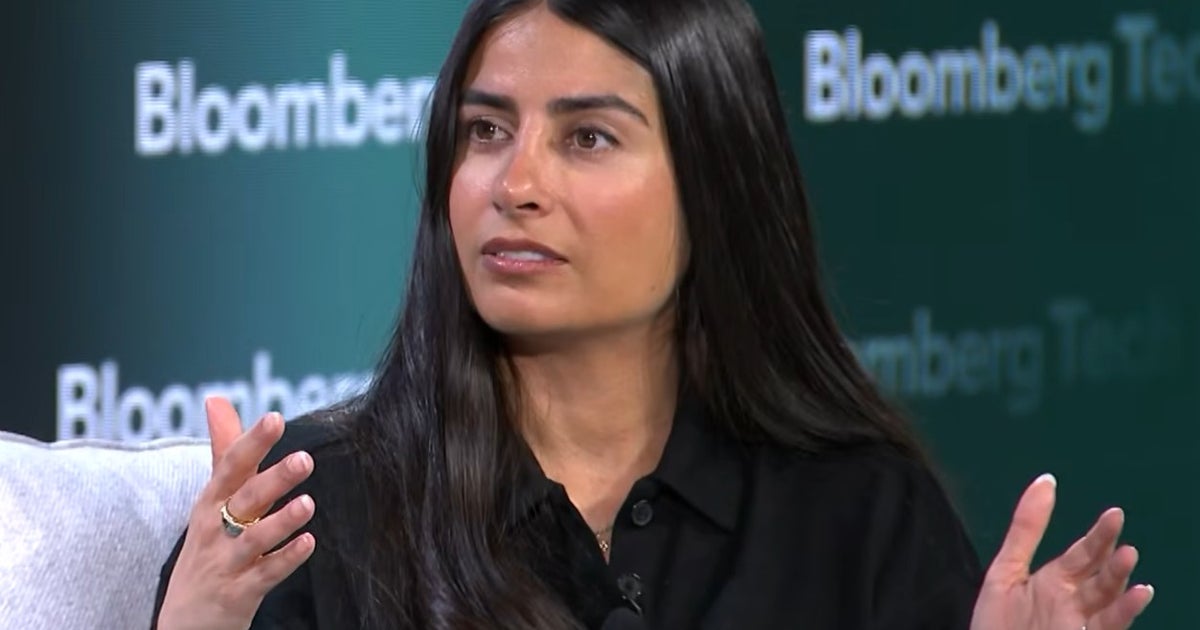
Xbox CEO Asha Sharma aims to make Xbox “the number one gaming and entertainment company,” and has emphasised that her immediate priority is “resetting the business.”
At a Bloomberg Tech event yesterday, Sharma discussed her first hundred days as CEO following Phil Spencer’s retirement in February.
During this period, Xbox reduced the price of Game Pass, which Sharma said has already had a positive effect.
The company also discontinued Gaming Copilot, made key leadership changes including appointing veteran analyst Matthew Ball as chief strategy officer, and shared initial technical details of its next-generation console, Project Helix.
However, Microsoft’s Q3 results showed a 33% year-over-year decline in Xbox hardware sales, which Sharma attributed to industry challenges and the ongoing memory shortage.
“The last generation product has had a particularly hard time. The most uncomfortable and surprising thing for me is what is happening in consumer electronics. What usually happens at this point in a generation is that your costs, including memory and storage, come down. With AI, memory and storage costs are going up 2.75 times rather than 50% down.
She continued: “In my first hundred days, it’s up 50%, and I think it will continue to go up. So the biggest challenge and opportunity is how to make affordable products during that time, and that’s what the next hundred days will be about.”
“My mandate is not a 30% accountability margin. It’s not enterprise software margins. It’s to be the number one gaming and entertainment company, and that’s what we’re going to do.”
When Microsoft Gaming returned to Xbox branding in April, Sharma and CCO Matt Booty announced plans to re-evaluate their approach to exclusivity and AI. Sharma expanded on these topics at the event, noting that Xbox is currently “the number two publisher in the world.”
“To succeed as a platform, we must offer exclusive content and services, and we’re looking at that very closely”
“To be a leading publisher, our games must reach large audiences. At the same time, we are increasingly becoming a platform. To succeed as a platform, we must offer exclusive content and services, and we’re looking at that very closely. We have to be very thoughtful about each title on how we want to think about it and learn from similar cases in the industry, and that’s what we’re doing.”
As for AI, Sharma previously said she had “no tolerance for bad AI” at Xbox, and that the firm “will not chase short-term efficiency or flood our ecosystem with soulless AI slop.”
Sharma reiterated her position, emphasizing that “we have to make sure it’s solving a problem if we put it there for gaming.”
“Do I believe in AI? Absolutely. I think neural rendering is a great opportunity for us to invest in. It helps upscale and reduce the footprint on your device, so you can get better graphics. There are a lot of things AI can be really great at.
“The biggest thing is how do we just make sure it’s solving problems. I’ve visited a lot of our studios, whether big or small, and I’m blown away by how they’re using AI in their production pipelines, iteration and prototyping.
“At the same time, I do not think AI will replace AAA games. I think it’s entirely possible that AI could represent a new category of games and a new type of development which enables more people to create and participate. We’ll keep an eye on that and see how we best serve it.”
When asked if Xbox will continue selling consoles into 2030, Sharma stated that the market remains stable and is central to Xbox’s identity, while also acknowledging the growth of other markets.
“We’re certainly going to continue to put out great reference experiences, but we’re also going to push into new spaces. Microsoft owns Windows, which is one of the largest gaming platforms. It has long had more players and more hours than any other platform, and it’s going to have a lot of dollars associated with that in the future, too.
“I look at console as core, and I look at our responsibility to not only serve that really well and get that healthy, but to also look at bringing the next generation online.”
