




Watching the impact that GTA 6 is having on the rest of the games market this year reminds me of an underwater nature documentary; specifically, the moment where startled fish scatter off to the sides as an enormous shark glides through their reef. Having originally loaded their games into the tail end of 2026 in order to avoid GTA’s previous May release date, the shift of GTA 6’s launch to November 19 sent the fish scattering again.
Where they have ended up, for the most part, is bunched up in September; as close to GTA as they dare to get, while trying to avoid totally slipping out of their target quarters. Some titles have taken the opportunity to spend a little more time in the oven and have slipped into early 2027. Others might yet join them. But for now, September is the refuge of choice for games fleeing the GTA 6 launch.
The consequence of this is that the back half of September looks incredibly packed – or like a bloodbath in the making, if you want to take a more jaundiced eye. As a consumer, I’m delighted to be spoiled for choice, but any publisher should get a little nervous at the thought of consumers having to make a choice between their big game and a whole rack of other big games in the same short window.
Of the big September dates so far announced – bearing in mind that we’re only at the kick-off of the June events when these release dates are often finalised – Marvel’s Wolverine from Insomniac Games kicks off the slate on the September 15, followed by Remedy’s Control Resonant and Konami’s Silent Hill: Townfall on September 24, then Capcom’s Onimusha: Way of the Sword on September 25.
There’s more to come in October, although a lot of the games in that month can make the claim that they’re not competing for the same turf as GTA 6. The likes of Bandai Namco’s Ace Combat 8 (October 2) and Secret Mode’s Star Wars: Galactic Racer (October 6) are at least in markedly different genres, even if some audience overlap probably still exists. But launching Call of Duty: Modern Warfare 4 on October 23, less than a month before GTA 6, is a somewhat daring move, especially given how much is riding on its performance following the franchise’s weak showing last year.
I don’t blame publishers for trying to avoid GTA 6’s launch window; it’s almost certainly going to be one of the biggest media events of the decade so far, let alone the biggest game launch. That said, the near-complete scattering of major titles out of November is a little peculiar. For one thing, it’s notable that GTA 6 is only launching on PlayStation 5 and Xbox Series X/S, which arguably makes this a pretty good month to launch a game that’s focused on PC or Switch – as long as you’re confident that you can survive all the publicity oxygen being sucked out of the room, I suppose.

The way that this scattering has stuffed major titles into the space of a couple of weeks in September, however, is commercial madness. I have no doubt it’s being justified with all sorts of PowerPoint slides showing audience segment graphs – publishers have for decades had a tendency to talk themselves into rhetorical knots explaining why their game doesn’t actually compete with some rival company’s game, or why the success of X won’t negatively impact sales of Y.
This has its roots, like so much of how the games business is run, in received wisdom from the movie business. Hollywood has for years taken advantage of the segmentation of its audiences; putting a big rom-com in cinemas at the same time as a huge action movie doesn’t hurt either, and can even create a bit of a positive halo effect. The most famous recent example was the simultaneous launches of Barbie and Oppenheimer, but down the years Hollywood’s standard practice (in the absence of the fabled “four quadrants” blockbuster) has been to have something in cinemas for the boys opposite something for the girls, something for the older audience alongside something for the kids, and so on.
Video games, for the most part, don’t work like that. For one thing, the games business simply doesn’t have an equivalent to a rom-com type genre that addresses a totally different market segment to the big action blockbusters. Games that target entirely different audiences do exist, but they’re usually small niches; the only arguable exception is kids’ games, and even those have a decent level of crossover with adult audiences (which isn’t that odd; plenty of adults go to see Pixar movies without a kid in tow).
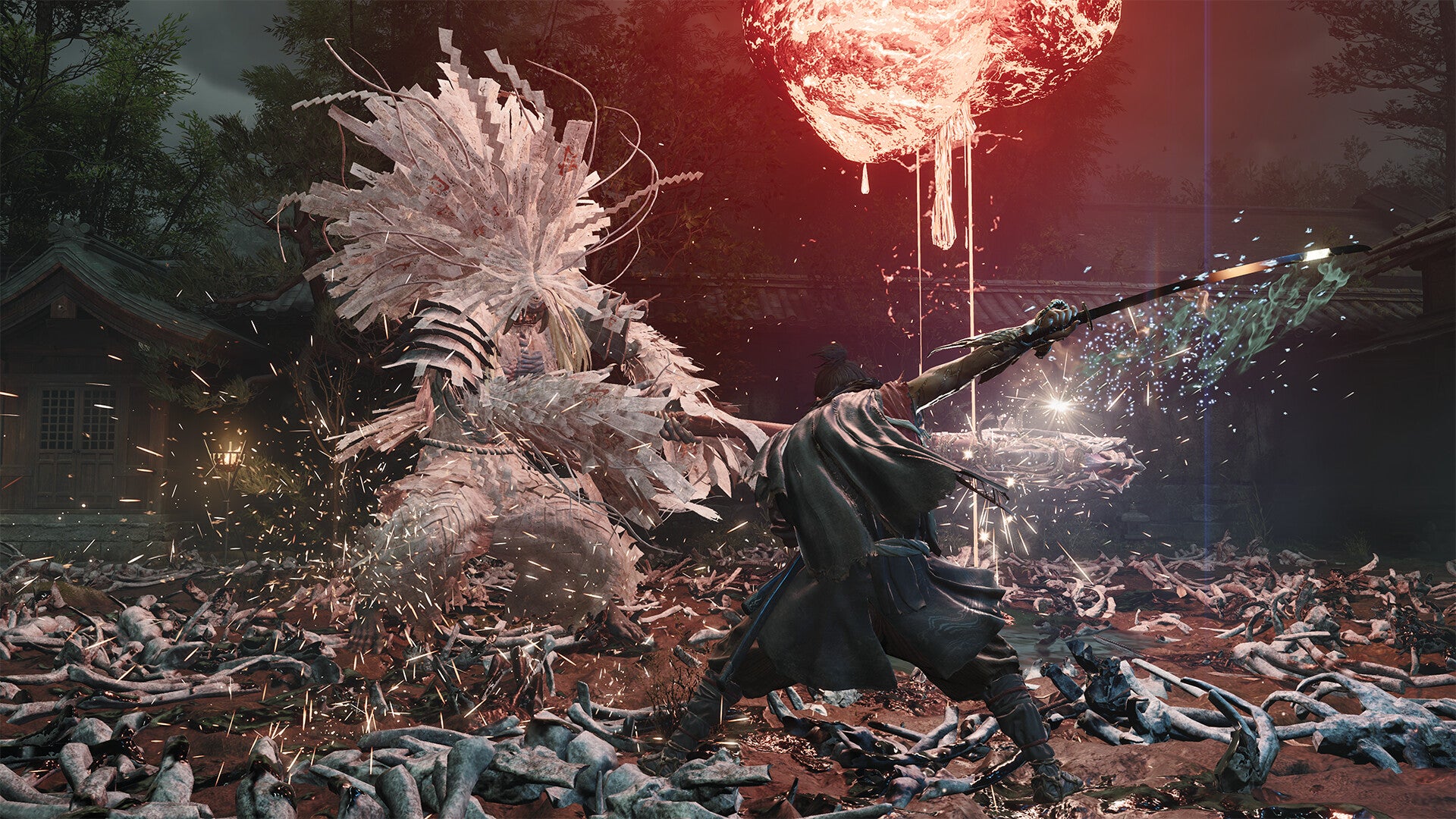
From a glass-half-full perspective, you could say that’s a testament to the diversity of tastes held by a large swathe of the gaming audience. If your glass is half empty, you might argue that it’s an indictment of how narrow the diversity of blockbuster games actually is. Either way, the results are the same. Put a list consisting of Wolverine, Control Resonant, Onimusha, and Silent Hill in front of the gaming audience, and a pretty substantial majority of them will probably be interested in playing all of them.
Then they’re going to pick one.
Sure, some people might buy more than one – but this is where the gap between the economics of videogames and the economics of movies becomes a chasm, because unlike movies that take two or three hours to finish, there are serious mechanical factors that push most consumers towards buying one game at a time, and usually not more than one game in a month.
For a start, games are expensive. They’re undoubtedly fantastic bang-per-buck once you calculate the minutes of entertainment they provide, but that up-front cost is still a noticeable chunk of cash for most consumers, especially in an economy that a lot of people don’t feel great about.
More importantly, though, games are incredibly time-consuming! For a plurality of consumers, who snatch a few hours here and there to game in between work and family responsibilities, finishing a decently long game takes weeks. They’re also deeply involving, meaning that few consumers have multiple games on the go at once (unlike, for example, TV shows); finishing one (or giving up on it) before starting another is the more common pattern. Why, then, would someone buy several games at launch price in the same month, when they’re just going to gather dust on a to-play stack – even as their price on Amazon slides gradually downwards, meaning the consumer kicks themselves for paying a launch-day premium for a game they wouldn’t play for weeks.

That’s part of the reason why publishers are so keen to load games up with pre-order bonuses and special items that only come with the first batch of copies sold; they know that such things will sway over some consumers who would otherwise have been happy to wait a while. They’re solid tactics, but they only work on some people, some of the time. For most people, I suspect (although as far as I can tell no data exist on this to either confirm or reject this hypothesis), buying one game at a time and not buying another one until it’s finished is the standard way to consume.
All of this bodes poorly for the releases now elbowing their way into September in a mad rush to escape from GTA 6. Launching a major console title alongside Rockstar’s behemoth would have been foolhardy – but launching four of the year’s biggest games within the space of a fortnight and watching them cannibalise one another’s launch sales isn’t much more commercially sensible. Arguments that one is a horror game, one is a superhero game, or that such and such game has a built in fanbase while some other game appeals to a different segment all sound very thin indeed when you place them against the simple reality of talking to consumers, or looking at what they’re saying online, and seeing that, yes, all of these games are in direct competition for money, time, and attention.
“All of this bodes poorly for the releases now elbowing their way into September”
Some of this may be unavoidable. Control Resonant, arguably the least well-established IP of the four big September releases, seems to have slipped into September from a planned August release, rather than swerving to avoid GTA 6. Remedy, perhaps even more than the other three publishers, is undoubtedly now wondering about the commercial prospects for this insanely competitive fourth quarter. It wouldn’t be the first publisher to recognise that discretion is the better part of valour and move a fledgling franchise to a release window where it can have a bit more breathing space (of note, Remedy pushed back Alan Wake 2’s release by ten days in 2023, seemingly to avoid going head to head with Marvel’s Spider-Man 2 and Super Mario Bros. Wonder).
Whether it’s Remedy or another publisher that moves their dates around, though, it does feel unlikely that the release plans will stay as they are now – meaning that everyone involved is playing a game of release-date chicken, and all hoping someone else blinks first.
